Concrete construction – ESSVE anchoring
Concrete construction
In close cooperation with our customers, we develop products that are in demand for all types of qualified anchoring to concrete.
Products for qualified concrete anchoring
Our range covers most project needs, and we are constantly adding new products. If you cannot find the product you need, contact us.
In Slovakia and the Czech Republic, ESSVE products are sold by the distributor Zrubko. Contractors usually appreciate being able to get all the material in a single delivery. If we do not have a product in stock, we will order it.
Free design software
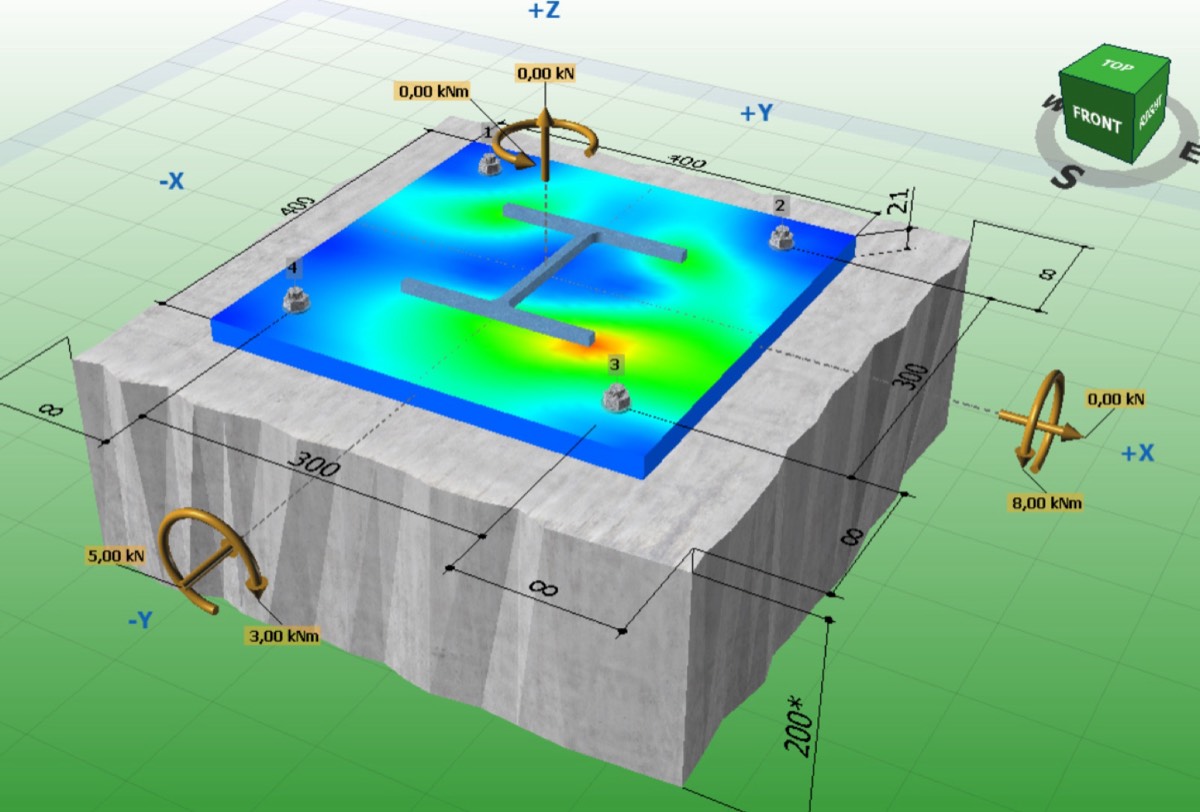
The ESSVE Calculation Software (CS) calculates the load capacity of concrete anchoring according to EUROCODE. The program calculates the load capacity for various types of use and proposes suitable products.
Proposes a narrowed selection
Instead of a list of several hundred products, ESSVE CS offers a narrowed selection. If you also enter an incorrect value, you get suggestions for correcting it immediately. The user can follow every calculation, so there is certainty that it is clear and complete.
Facts about ESSVE CS
- Calculates the load capacity of the fastener
- Proposes the product and dimensions
- Recalculates automatically after every value entered
- Detects errors in good time
- Complies with applicable regulations and standards
- 3D model
Download ESSVE CS (ESSVE registration form in English)
Arrange load capacity tests directly in the building
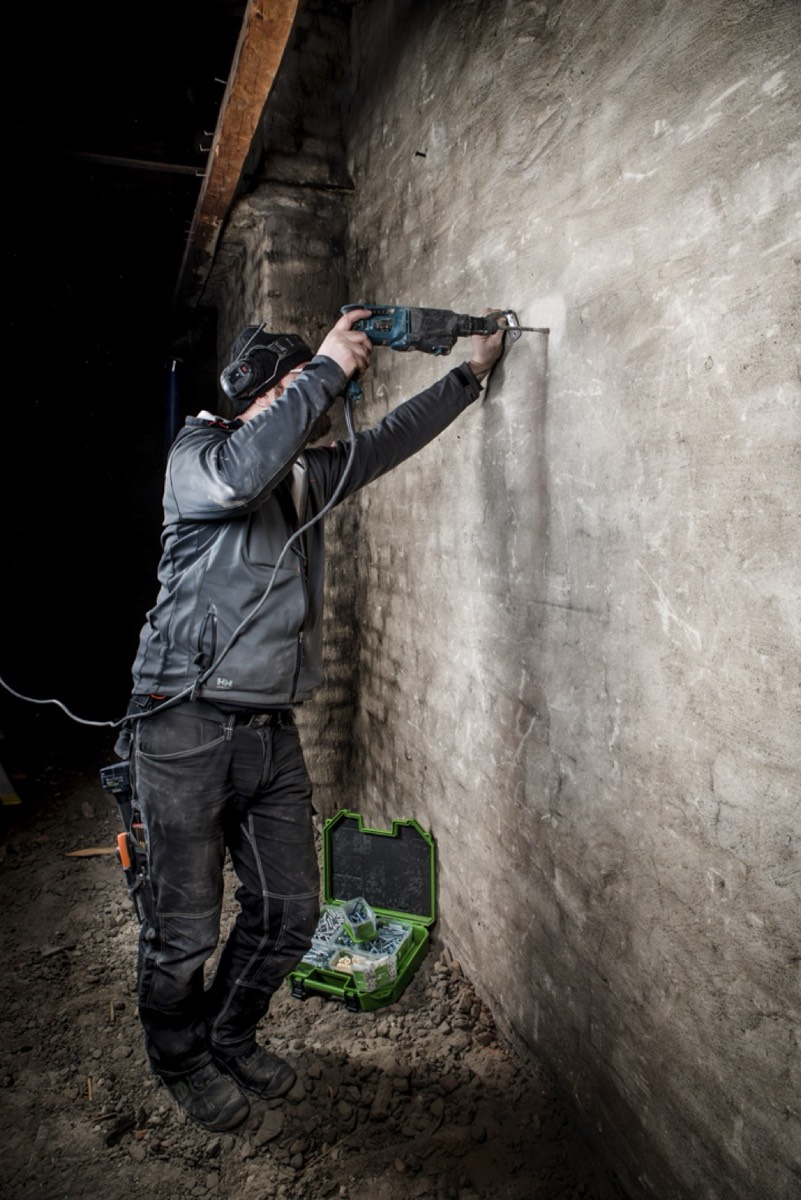
Arrange load capacity tests to be certain that the anchoring will definitely be adequate. Our certified ESSVE sales representatives carry out the tests on the customer's premises. The test service verifies the load capacity of the base material. Afterwards you receive a list of the fasteners to be used and the number of anchoring points needed for safe installation.
It often happens that more fasteners are used than necessary. Test anchoring is therefore a good investment.

Different types of concrete anchoring
Chemical anchor – exceptionally strong
Anchoring mortar is recommended when there is a risk of the concrete cracking or when another solution simply does not work – for example, when anchoring a railing to the edge of a balcony slab.
Anchoring mortar (chemical anchor) is ideal for anchoring in hollow-core slabs, natural stone, concrete, perforated brick, masonry and lightweight concrete. The installation is permanent and exceptionally strong. The deeper the anchor is set, the higher its load capacity.
Two-component resin
A common feature of all chemical anchors is that they consist of two components which harden into a solid mass once mixed. Chemical anchors are usually supplied in cartridges in which the two components are in two separate chambers. When the resin is dispensed from the cartridge, it passes through a mixing nozzle that mixes the components into the finished resin. When dispensing, it is important first to make several pumping strokes until you see that the mixture is well blended, and only then start using it in the anchoring hole. If the resin is not mixed, it will not harden.

Concrete screw
Concrete screws can have several different head shapes, for example round, countersunk and hexagonal. Because concrete screws grip the concrete with their thread, they are thread-forming anchors.
Push-through installation
Because the head is a fixed part of the screw, a concrete screw is installed through the part being fastened (push-through installation). Concrete screws are available in a zinc-plated version, CorrSeal (C4) or stainless steel. During installation, the holes are drilled according to the installation instructions. The screw is then screwed into the drilled hole, where it cuts a thread in the concrete.
Do not overtighten
Tighten until the part being fastened sits without play. The screw does not need to be tightened to a specified torque. However, the maximum tightening torque should not be exceeded, if it is stated in the installation instructions.
The ESSVE range includes concrete screws in sizes 6.3 (5), 7.5 mm (6 mm), 10.5 (8), 12.5 (10) and 16.5 mm (14 mm). The first number is the outer thread diameter and the second number in brackets is the drill bit diameter.

Expansion anchors – for concrete and hard rock
Our expansion anchors work in concrete and in hard rock and are available for both non-cracked and cracked concrete. Typical sizes range from M6 to M24 and they are usually supplied in a zinc-plated version, hot-dip galvanised or stainless steel.
Secured by tightening
Expansion anchors are suitable for both push-through and pre-positioned installation. The hole in the concrete is drilled to the same diameter as the M thread of the expansion section. The anchor is inserted into the hole and then the part to be mounted is fixed in place. The nut is then tightened. It is important that the nut is tightened to the torque specified in the installation instructions.
Drop-in anchors
Drop-in anchors are available for drilling holes of 8 – 25 mm and for anchoring with an M5 – M20 screw. Because the outer diameter of the expansion section exceeds the diameter of the fixing screw, drop-in anchors must be set before the part to be fastened is positioned – this is pre-positioned installation. They are usually supplied in an electro-galvanised version and in stainless steel.
Tool adapted to every size
Drop-in anchors are expanded by pushing the cone inside the expansion section forward. This is done with a tool adapted to each anchor size. This ensures correct expansion when the tool is driven in all the way to the stop. Drop-in anchors are available with and without a collar. When using an anchor without a collar, it is important that the depth of the drilled hole corresponds to the installation instructions.
Reduces the risk of hitting reinforcement
The setting depth of drop-in anchors is always small, which can be an advantage because it reduces the risk of hitting reinforcement during installation. Drop-in anchors are deformation-controlled expansion anchors, because expansion is created by driving the cone into the expansion section to a certain depth.

You can find more concrete anchoring products in our concrete anchoring range.
Didn't find what you were looking for?