
A neat joint step by step
How to get a neat joint
Acrylic sealant is ideal for covering joints, cracks and transitions between different materials – especially where you will paint later. For a neat and durable result, however, you need to work methodically. Here is a simple step-by-step guide.

Step by step to a neat joint
- Clean the substrate. The surface must be free of dust, grease and loose particles. Clean it with a damp cloth or a vacuum cleaner. The sealant will then adhere better and last longer.
- Tape the edges for straight lines. Apply masking tape on both sides of the joint. You will get straight edges and avoid making a mess.
- Apply the acrylic sealant. Cut the cartridge nozzle at the right angle, with an opening to suit the width of the joint. Hold the gun at the same angle and extrude the sealant in a calm, steady movement.
- Tool the sealant. Smooth the sealant with a sealant spatula or a slightly moistened finger. Remove the excess and shape a smooth, even joint. Remove the tape straight after tooling – before the sealant has time to dry.
Seal like a professional
ESSVE acrylic sealants
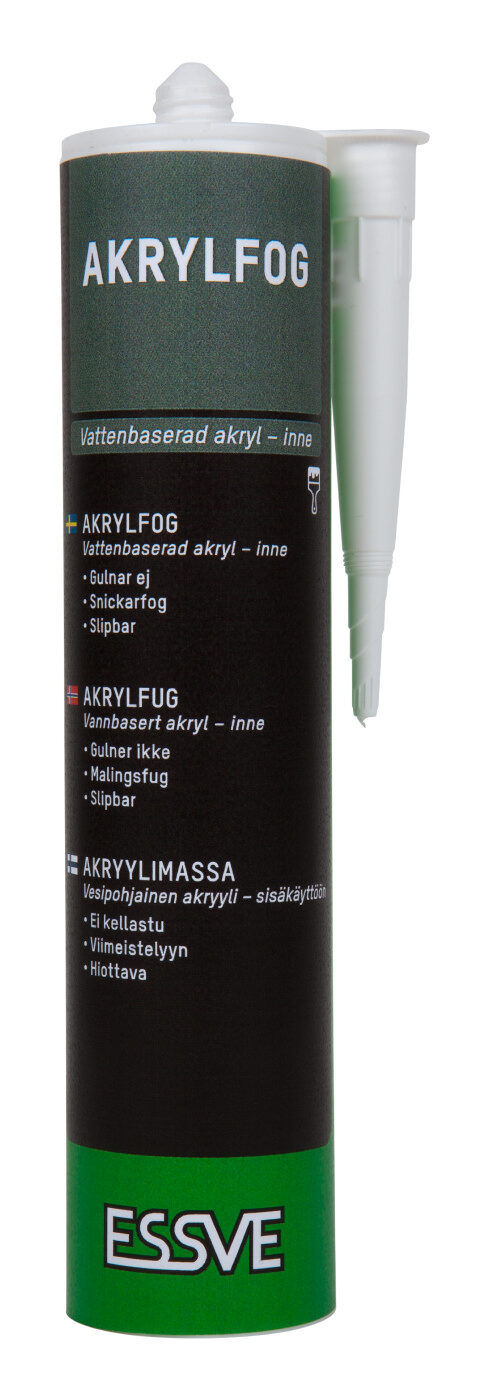
Acrylic sealant Flex is a highly elastic premium paintable sealant for use indoors and outdoors. Use standard acrylic sealant indoors where the joint does not have to take up large movements.


Common sealing mistakes to avoid
- Painting too early: Acrylic sealant must dry thoroughly before painting, otherwise the paint may crack.
- Too much sealant: Overfilled joints are uneven and hard to paint neatly.
- Poor cleaning: Sealant comes away sooner from a dirty substrate.
- Sealing in wet rooms: in wet rooms you need a sealing compound intended for wet environments, most often silicone. The sealant must repel water, be flexible and resist mould growth. Our Acrylic sealant Flex carries CE marking for wet rooms (XS2). If you cannot find Acrylic sealant Flex, Silicone for wet rooms is also an excellent choice for wet rooms.
If you follow this advice, you will get not only a neat result but also joints that last a long time.


5 tips for durable acrylic joints indoors
Acrylic sealant is the obvious choice when you want neat, paintable joints indoors. But the result is only as good as the preparation and technique allow. Our new acrylic sealants Acrylic sealant Flex and Acrylic sealant are developed to be easy to apply for professionals and DIYers alike and to create a hard-wearing surface – and with the right method you will get a result that really lasts. Here are five tips to keep in mind:
- Choose the right joint width. An even joint of the right size is the basis of durability. Narrow joints can crack, while joints that are too wide are harder to smooth. With the premium sealant Acrylic sealant Flex you can seal joints up to 25 mm wide; for the standard acrylic sealant Acrylic sealant we recommend no more than 5 mm.
- Apply at the right temperature. For the best adhesion and workability, apply acrylic sealant at temperatures from +5 to +40 °C. It then sets at a suitable rate and bonds well to the substrate. Our acrylic sealants also apply well in slightly colder conditions.
- Use a primer if needed. Porous materials such as drywall, concrete or untreated wood can draw moisture out of the sealant. If you prime the surface or use an acrylic sealant with exceptionally good adhesion, you reduce the risk of the sealant coming away and drying unevenly.
- How to prevent cracks and shrinkage. A common mistake is applying layers that are too thick. The sealant can then shrink or crack as it dries. Instead, apply an even joint of the right size from the start.
- Let the sealant dry thoroughly before painting. Many people rush to paint, but acrylic sealant must dry thoroughly so that the paint does not crack. Always keep to the drying time stated on the packaging. Our new premium variants can be painted sooner than traditional acrylic sealant – ideal when you are in a hurry.