
Seal with acrylic, silicone or hybrid sealant?
Seal with silicone, acrylic or hybrid sealant?
There are several types of sealant to choose from. Their properties differ, and here we explain when to use which.
In brief
What is acrylic sealant?
- Water-based latex sealant
- Used for joints and filling
- Paintable
- Does not yellow
- Shrinks back slightly as it dries
- Flexibility depends on the product
- Most can only be used indoors…
- …but Acrylic sealant Flex carries CE marking for outdoor use too
In its composition, acrylic sealant resembles water-based paint, so unwanted sealant residue is easily wiped off with a damp cloth. Acrylic sealants are paintable, which makes them very popular with decorators. Because, unlike curing products, the sealant dries, expect it to shrink back slightly after application.
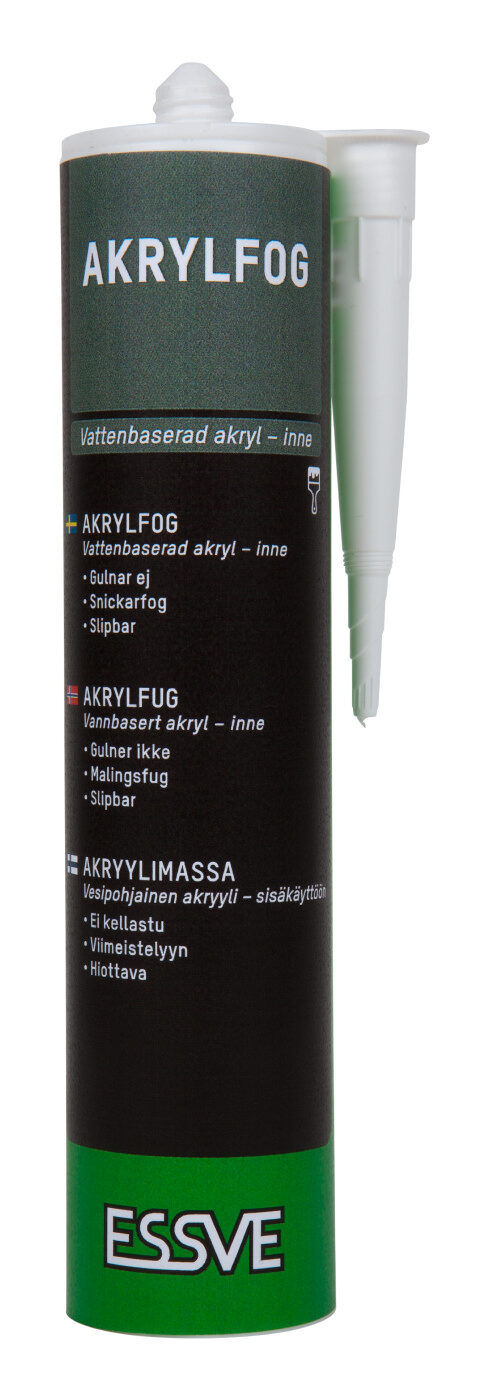
The ESSVE range includes two acrylic sealants. Acrylic sealant Flex is a highly elastic premium paintable sealant for use indoors and outdoors, which also dampens sound well. Acrylic sealant is a classic carpenter's sealant for narrow joints (max. 5 mm) indoors that do not have to take up large movements.
ESSVE acrylic sealants contain no volatile plasticisers, so they do not yellow and stay white and flexible for a long time. All our acrylic sealants are paintable and water-based.
Which materials does acrylic sealant adhere to?
|
|
||
|
Aluminium |
YES |
YES |
|
Concrete |
YES |
YES |
|
Lead |
NO |
NO |
|
Expanded polystyrene |
NO |
NO |
|
Drywall |
YES |
YES |
|
Glass |
YES |
YES |
|
Ceramics |
YES |
YES |
|
Copper |
NO |
NO |
|
Laminate |
YES |
YES |
|
Expanded clay (Leca) |
NO |
YES |
|
Metal |
YES |
YES |
|
Plastic* |
YES |
YES |
|
Porous materials |
YES |
YES |
|
Mirror glass |
NO |
NO |
|
Chipboard |
YES |
YES |
|
Stone |
NO |
YES |
|
Roofing felt |
NO |
NO |
|
Brick |
NO |
YES |
|
Tin |
NO |
NO |
|
Wood |
YES |
YES |
*Does not apply to greasy plastics such as PP, PE and PTFE
Technical overview of acrylic sealants
|
|
||
|
Shore A hardness |
20 – 30 |
20 – 30 |
|
BASTA (Swedish assessment of chemical substances in construction products) |
YES |
YES |
|
CE marking |
YES |
YES |
|
Sealing indoors |
YES |
YES |
|
Sealing outdoors |
NO |
YES |
|
Sealing in wet rooms |
NO |
YES* |
*Acrylic sealant Flex carries CE marking for wet rooms (XS2)
Acrylic sealant range
Acrylic sealant Flex is a highly elastic premium paintable sealant for use indoors and outdoors. Use standard acrylic sealant indoors where the joint does not have to take up large movements.


In brief
Silicone – what is it?
- Can be used outdoors and indoors (depending on the product, see the table)
- Highly resistant to sunlight
- Withstands high temperatures
- Smooth closed surface – does not go mouldy
- Suitable for bathrooms and wet rooms
- Suitable for joints around windows
- Cannot be painted
Silicone products are highly resistant to sunlight and form a closed surface that does not go mouldy. Thanks to the closed surface and an added biocide, which reduces the risk of dirt going mouldy, silicone products are very well suited to sealing in bathrooms and other wet rooms.
Silicone products also withstand very high temperatures and sunlight. That makes them a good choice where there is a lot of sun, for example around windows.
|
|
||
|
Sealing indoors |
YES |
YES |
|
Sealing outdoors |
YES |
NO |
|
Weather resistance |
YES |
NO |
|
Paintability |
NO |
NO |
Which materials does silicone sealant adhere to?
|
|
||
|
Aluminium |
NO |
YES |
|
Concrete |
NO |
YES |
|
Lead |
NO |
NO |
|
Expanded polystyrene |
NO |
NO |
|
Drywall |
NO |
NO |
|
Glass |
YES |
YES |
|
Ceramics |
YES |
YES |
|
Copper |
NO |
NO |
|
Laminate |
YES |
YES |
|
Expanded clay (Leca) |
YES |
YES |
|
Metal |
YES |
YES |
|
Plastic* |
YES |
NO |
|
Porous materials |
YES |
YES |
|
Mirror glass |
NO |
YES |
|
Chipboard |
YES |
YES |
|
Stone |
NO |
YES |
|
Roofing felt |
NO |
NO |
|
Brick |
YES |
YES |
|
Tin |
NO |
NO |
|
Wood |
YES |
YES |
*Does not apply to greasy plastics such as PP, PE and PTFE
Silicone range
ESSVE has two silicone products – Pool & Glas can also be used outdoors, as it is weather-resistant. Silicone for wet rooms is used indoors, especially in bathrooms and other wet rooms.


In brief
What is hybrid sealant?
- Used outdoors and indoors (depending on the product, see the table)
- Versatile
- Cures quickly
- Does not shrink back as it cures
- Good colour stability and temperature resistance
- Paintable
Hybrid sealing compounds combine the advantages of silicone and polyurethane products, which is why they are referred to as hybrid, SMP or MS. Here we will call them hybrid sealants.
Hybrid sealant is suitable for many common sealing jobs, for example sealing facades outdoors or joints between the floor and the wall. Hybrid products are paintable, so they are a good choice when sealing close to painting work.
Hybrid products do not dry but cure, so they do not shrink back as they cure.
At ESSVE we have two really good universal products: the slightly higher-performing ESSEAL ESS1 and a good universal product we call ESSEAL & BOND. Besides these, we have hybrid sealants developed for more specific uses.
|
|
Construction sealant Akustik |
||||||
|
Sealing indoors |
YES |
YES |
YES |
NO |
YES |
NO |
YES |
|
Sealing outdoors |
YES |
YES |
YES |
YES |
NO |
YES |
NO |
|
Weather resistance |
YES |
YES |
YES |
YES |
NO |
YES |
NO |
|
Paintability |
YES |
YES |
YES |
YES |
YES |
NO |
NO |
|
Movement capability |
± 20 % |
± 20 % |
± 25 % |
± 25 % |
- |
- |
- |
Which materials does hybrid sealant adhere to?
|
|
Construction sealant Akustik |
||||||
|
Aluminium |
YES |
NO |
YES |
YES |
YES |
YES |
YES |
|
Concrete |
YES |
YES |
YES |
YES |
YES |
YES |
YES |
|
Lead |
NO |
NO |
NO |
NO |
NO |
YES |
NO |
|
Expanded polystyrene |
YES |
NO |
YES |
NO |
NO |
NO |
YES |
|
Drywall |
YES |
YES |
YES |
NO |
YES |
NO |
YES |
|
Glass |
YES |
NO |
NO |
NO |
NO |
NO |
YES |
|
Ceramics |
YES |
NO |
NO |
YES |
NO |
NO |
YES |
|
Copper |
NO |
NO |
NO |
NO |
NO |
YES |
NO |
|
Laminate |
YES |
NO |
NO |
NO |
YES |
NO |
YES |
|
Expanded clay (Leca) |
YES |
NO |
YES |
YES |
NO |
NO |
YES |
|
Metal |
YES |
YES |
YES |
YES |
YES |
YES |
YES |
|
Plastic (except PP, PE, PTFE) |
YES |
YES |
YES |
YES |
YES |
NO |
YES |
|
Porous materials |
YES |
NO |
YES |
YES |
NO |
NO |
YES |
|
Mirror glass |
YES |
YES |
NO |
NO |
NO |
NO |
YES |
|
Chipboard |
YES |
YES |
YES |
YES |
YES |
YES |
YES |
|
Stone |
YES |
YES |
YES |
YES |
NO |
YES |
YES |
|
Roofing felt |
NO |
NO |
NO |
NO |
NO |
YES |
NO |
|
Brick |
YES |
YES |
YES |
YES |
NO |
NO |
YES |
|
Tin |
NO |
NO |
NO |
NO |
NO |
YES |
NO |
|
Wood |
YES |
YES |
YES |
YES |
YES |
NO |
YES |
Hybrid sealant range
ESSEAL ESS1 is a premium product suitable for almost every sealing job. Our other hybrid sealants are developed for more specific uses.


The information in this guide is for guidance only. Follow the manufacturer's technical data sheet and the applicable standards; if in doubt, contact us.