
Tips and inspiration for installing a wooden facade
Facade tips from a Grand Designs build
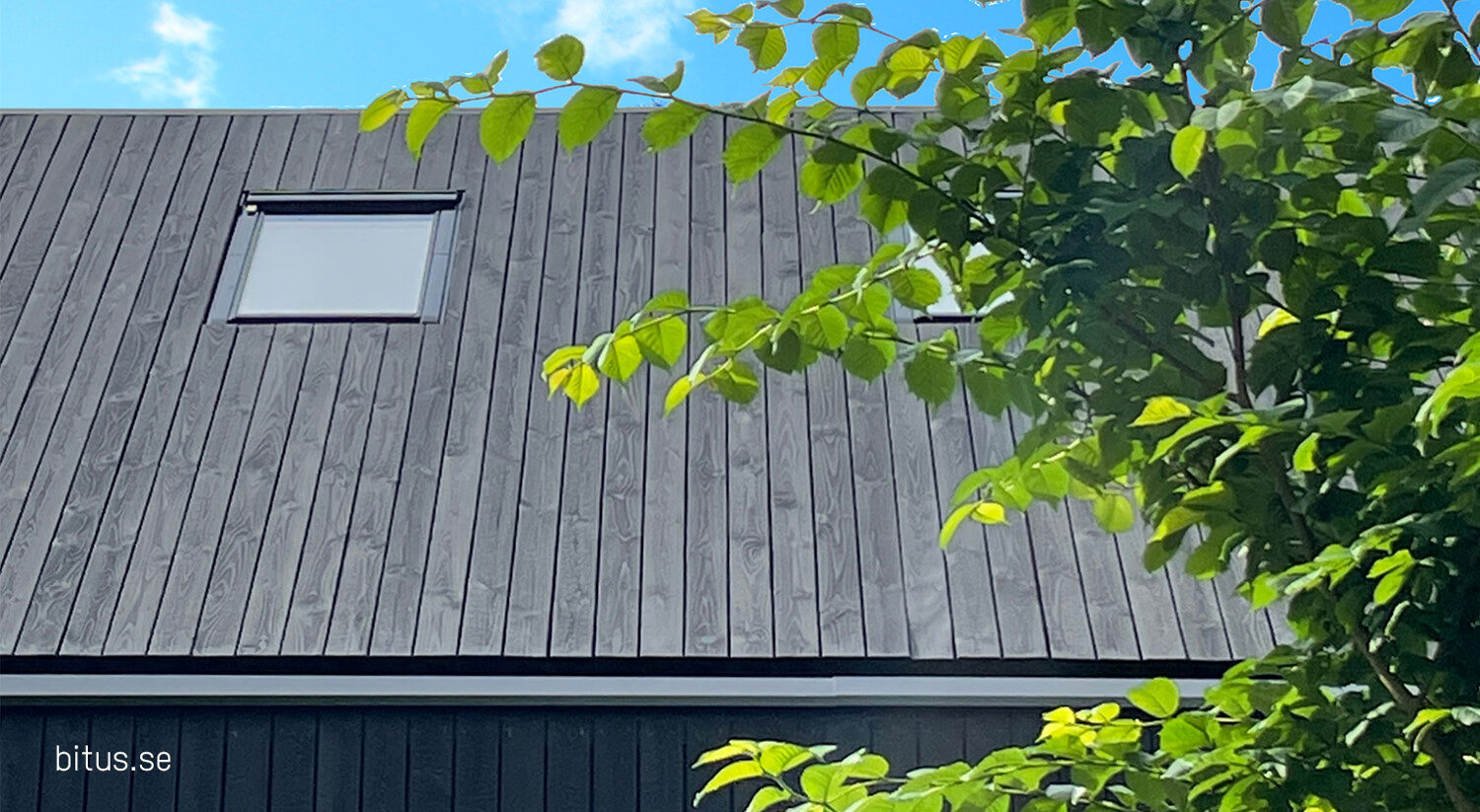
Architect Edd Rushton’s house owes much of its character to a wooden facade treated using the Shou Sugi Ban technique. What are the advantages of this kind of wood, and what should you bear in mind when installing the facade?

A wooden facade treated using the Shou Sugi Ban technique
When homeowner and architect Edd was building his dream house, he chose a charcoal-black facade treated using the Shou Sugi Ban technique, which he installed with black lacquered ESSVE facade screws. He wanted to achieve a beautiful, understated facade where the wood cladding and the facade screws match tone on tone. He also highlights a practical advantage of screwed facade cladding: the elements built in behind the facade can easily be removed and maintained without damaging the wood.
The build was so innovative that the Swedish version of the programme Grand Designs on Swedish TV channel TV4 decided to follow it – you can watch it on TV4 Play. If you would like to see more photos than there are in this article, we recommend following the Instagram account of the villa @villalundberg or of the architectural practice behind it, @rushtonarkitektur.
What is Shou Sugi Ban?
Shou Sugi Ban is an ancient technique in which wood is treated and preserved with fire. The wood is charred to varying degrees, and the charred surface is left untreated or brushed off to a greater or lesser extent depending on the desired look. If you wish, you can seal the wood surface with oil or paint.
Shou Sugi Ban is a sustainable choice in the long term, because after treatment the wood gains several beneficial properties:
- fire-resistant properties
- resistance to rot
- protection against UV radiation and weathering
- lower maintenance costs, because the wood does not need to be painted or maintained


Installing the wood cladding
For the installation, Edd chose a black lacquered facade screw. The screw is sold strip collated and loose, and in several colours.


Interview with architect Edd
On the choice of design and products.
Video by the manufacturer ESSVE, without English subtitles.

3 tips for installing facade cladding
1. The right corrosion protection for the screw.
Facades have to withstand all the elements. That is why it is important to use a stainless steel facade screw in A4 quality. An A4 stainless steel screw provides the best possible corrosion protection and is flexible enough to follow the movement of the wood over time.
2. The right facade screw length.
When installing a wooden facade, it is important that the facade screw does not penetrate the wind barrier behind the wood cladding. That is why it is important to buy screws of the right length. Find out the thickness of the cladding and of the batten behind it, and choose a screw that is no longer than these two thicknesses together. At the same time, make sure the screw is long enough to hold well in the batten. ESSVE facade screws are sold in lengths of 45 – 72 mm.
3. Will you paint over the screw?
Before you buy facade screws, ask yourself whether you will paint over the screws or not.
- The screw Edd chose (a facade screw with a countersunk head) has a sealing rim around the head that closes the entry hole in the wooden facade, so it does not need to be painted over.
- If you choose a facade screw with a cylindrical head, it has to be painted over. The screw has a small head that is countersunk into the wood, so the installation is very discreet. However, the small head has to be painted over to seal the entry hole in the wood. This reduces the risk of the wood absorbing moisture, changing colour or the facade starting to rot over time.
Remember! If the appearance of the facade changes significantly, e.g. its colour or material, the work may have to be notified to the building authority in advance – for example for a building in a heritage conservation area or when the change affects the appearance of the house from a public space. Check this in good time with the building authority of your municipality so that you do not have to interrupt the work.


Installing wood cladding with nails?
Our range includes both loose cladding nails and strip collated nails. The stainless steel strip collated nails are also made in several colours so that you can match them to the wood cladding.
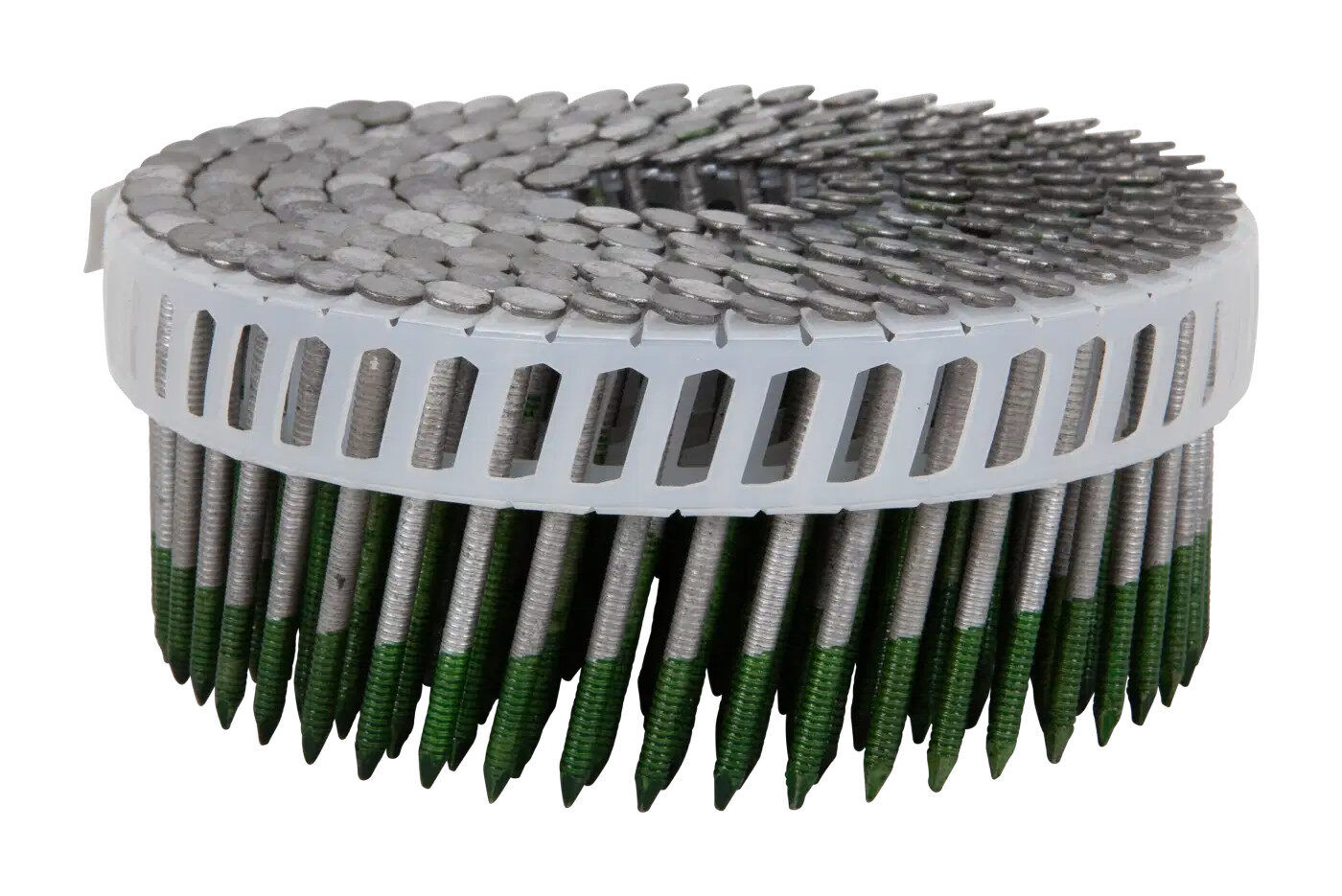 Cladding nails, coil collated 15°, plastic strip, HGC
 ESSVE Ring shank nail, plastic coil 15°, RAL 3009 oxide red 2.8 x 48 mm A4, pack of 800
 ESSVE Ring shank nail, plastic coil 15°, RAL 7039 quartz grey 2.8 x 48 mm A4, pack of 800
 ESSVE Ring shank nail, plastic coil 15°, RAL 8014 sepia brown 2.8 x 48 mm A4, pack of 800
 ESSVE Ring shank nail, plastic coil 15°, RAL 8022 black brown 2.8 x 48 mm A4, pack of 800
The information in this guide is for guidance only. Follow the manufacturer's technical data sheet and the applicable standards; if in doubt, contact us.
The information reflects the Slovak Building Act No. 25/2025 Coll. as amended on 22 September 2026 and does not replace legal advice. Before starting work, check the requirements with the building authority of your municipality.