
5 tips on how to care for thermally modified wood properly
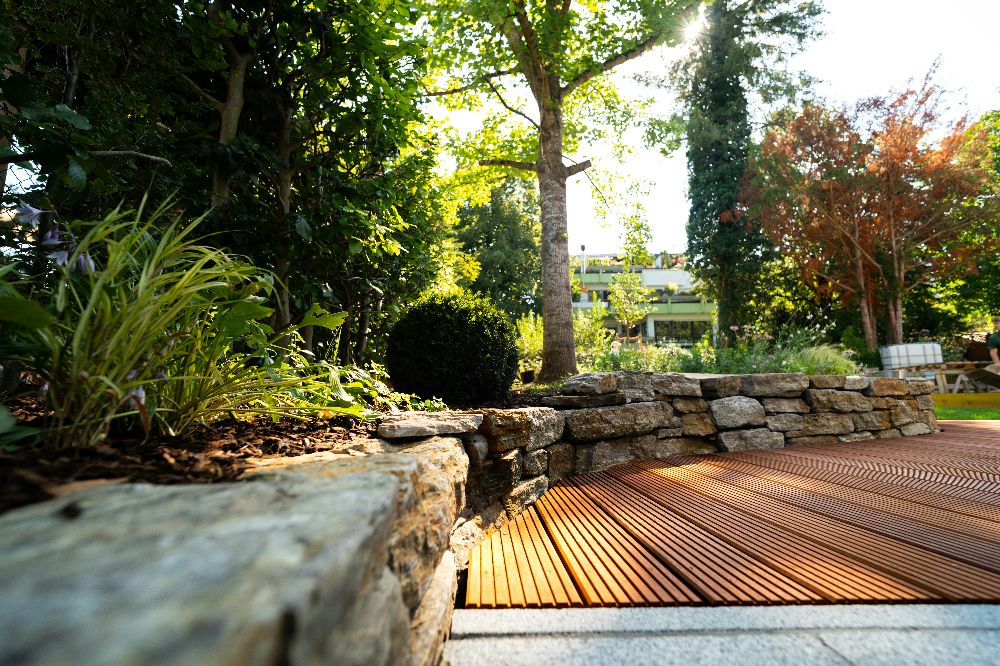
You buy thermally modified wood because it is meant to withstand moisture, heat and sun better than ordinary wood. That does not mean, however, that you do not have to look after it at all. Without any treatment it turns grey, small surface cracks may appear, and with sauna benches, care also decides how long they will stay pleasant to the touch.
There is also a difference between a deck and a sauna — outdoors you are fighting mainly UV radiation, indoors rather moisture and repeated heat. The procedures below are based on technical documents of the International ThermoWood Association (ITWA).
Why thermally modified wood turns grey and whether it is a problem
Thermally modified wood is made by controlled heating of wood to 160 to 220 °C without oxygen and without chemicals. The heat breaks down part of the hemicelluloses, i.e. the sugars that fungi and wood-boring insects feed on. The wood thus gains a darker shade and higher resistance to decay. At the highest temperatures (around 212 °C, class Thermo-D) it even reaches durability class 2 according to EN 350, which in practice means decades of service life above ground.
The problem is that this brown colour is not permanent. Under UV radiation the surface starts turning silvery grey as early as three to six months after installation, depending on the climatic conditions.
What matters is that this change is only cosmetic. The grey colour itself has no effect on the wood's resistance to rot. If you do not mind the grey shade, you can let the thermally modified wood go grey with no treatment at all and it will perform just as well as coated wood.
If you want to keep the original caramel to chocolate shade, you need to plan for regular oiling. Our range includes the market leaders in wood oils - the OSMO and Remmers brands, and we will be happy to help you choose the right product for treating thermally modified wood.
@KATEGORIE: /en/wood-paints-and-oils/, 3
1. Thermally modified wood on a deck and how to treat it
A deck is the most heavily stressed surface there is for thermally modified wood. It is tested by foot traffic, rain, snow and direct sun. On top of that, all these factors sometimes act on it at the same time.
Cleaning before treatment
Wash the deck before every application of oil. A soft brush and a cleaning agent intended for wood are enough, not aggressive acidic or alkaline cleaners, which can damage the surface.
If the boards have already turned grey and you want to restore the original colour, use Wood Reviver and light sanding with sandpaper of around P120 grit. Not finer, because too fine a grit polishes the surface rather than preparing it to absorb the oil.
@PRODUKTY: /en/osmo-wood-reviver-gel-cleaning-agent/
Oiling and UV protection
On thermally modified wood use an oil made specifically for this material - we recommend OSMO Decking Oil for thermally modified wood 2.5 l , which is blended directly to its shade. A clear oil without a UV filter will not preserve the colour at all; a pigmented oil with UV protection will slow the change, but will not stop it permanently.
Greying is delayed, not stopped. Note: linseed oil is not suitable for thermally modified wood, manufacturers of heat-treated wood explicitly exclude it from their recommended products.
Before the first coat, leave new boards to weather for a few weeks, so the oil bonds better. Apply a thin layer with a brush or roller along the grain and wipe off excess oil with a cloth after 10 – 15 minutes, so that no glossy patches form on the surface.
2. How often to oil a deck
For horizontal surfaces exposed directly to the weather, we recommend regular treatment with decking oil approximately once every two years. Otherwise the risk of cracking and a splintery surface increases.
The exact interval varies with sun exposure and the amount of use, so after the first year watch how well the oil holds on the surface: when water stops beading and soaks in, it is time to renew it.
3. Thermally modified wood in a sauna
A sauna places different demands on the material than the outdoors. Here we are not dealing with UV radiation but with repeated cycles of high temperature and humidity.
Ventilation is the basis of maintenance
After every sauna session, ventilate the sauna thoroughly and let the wood dry out completely. A permanently humid environment without ventilation is the main reason why cladding and benches lose their looks faster than they need to.
@KATEGORIE: /en/thermally-modified-wood/, 3, slider
Cleaning surfaces and benches
Wash benches and backrests with lukewarm water, or with a mild soap solution free of fragrance and harsh chemicals - in the hot and humid environment these would soak in deeper and may irritate the skin during your next sauna session.
Sweat stains on the seating surface can be removed by light sanding with the finest sandpaper along the grain.
What does not belong in a thermally modified wood sauna?
In a sauna, do not use lacquers or coatings that form a continuous film on the surface — with repeated heating they crack and peel off. Oils with a strong scent or with thinners that evaporate into the air at temperatures above 80 °C are also unsuitable.
If you do want to treat the benches, choose an oil made specifically for sauna wood, which withstands temperature cycles without odour.
4. Installation decides service life before oiling even begins
Thermally modified wood is harder and more brittle than untreated wood of the same species, so with incorrect installation it can splinter at the edges. Our tips on how to prevent this:
- Pre-drill holes before screwing and nailing, especially closer to the edges of the boards.
- Use stainless steel fasteners. Ordinary steel screws combined with the moisture of a deck or sauna corrode faster and stain the surrounding wood.
- Treat the cut edges too. When you cut boards to length, you expose the untreated inner cross-section, which is less protected than the heat-treated surface - an additional coat of oil on the cut will extend the service life of the whole board.
- Leave expansion gaps. Although thermally modified wood changes its dimensions much less than ordinary wood, it is not entirely free of movement. When installing a deck or cladding, allow for gaps as recommended by the profile manufacturer.
When cutting and sanding thermally modified wood, use only sharp tools. Why? A blunt blade or saw blade tears the wood rather than cutting it, which increases the risk of chipped edges. Sanding produces fine dust, which you are advised not to inhale, just as when working with ordinary wood.
To choose the right material, take a look at our full range of thermally modified wood, where you will find cladding and battens in various profiles, as well as fasteners in stainless steel. Get in touch and we will be glad to advise you on anything you need.
5. What to do when thermally modified wood has already turned grey
The grey patina can be brought back to a brown shade, but not indefinitely and not without compromises in the quality of the wood. The procedure is as follows:
- thorough washing, or Wood Reviver if needed
- light sanding once dry
- a new coat of pigmented oil.
If the grey layer is only superficial and recent, often washing and a coat without sanding are enough. The longer you let the wood go grey, the greater the chance that it will need more thorough sanding for the oil to adhere well again.
@PRODUKTY: /en/osmo-topoil-oil-wax-coating-natural/, /top-terasovy-olej/, /uv-ochranny-olej-farebny/, mix
If, on the other hand, you like the grey look, no action is needed. Just check regularly that no deeper cracks are forming on the surface that would require replacing the board.
If you are choosing material for a deck, facade or sauna, take a look at the range of thermally modified wood at Zrubko.sk or come straight to our shop in Kysucké Nové Mesto, where we will help you choose both the material and the right oil for its maintenance.