
Restoring wooden furniture with Osmo: natural beauty that lasts for years
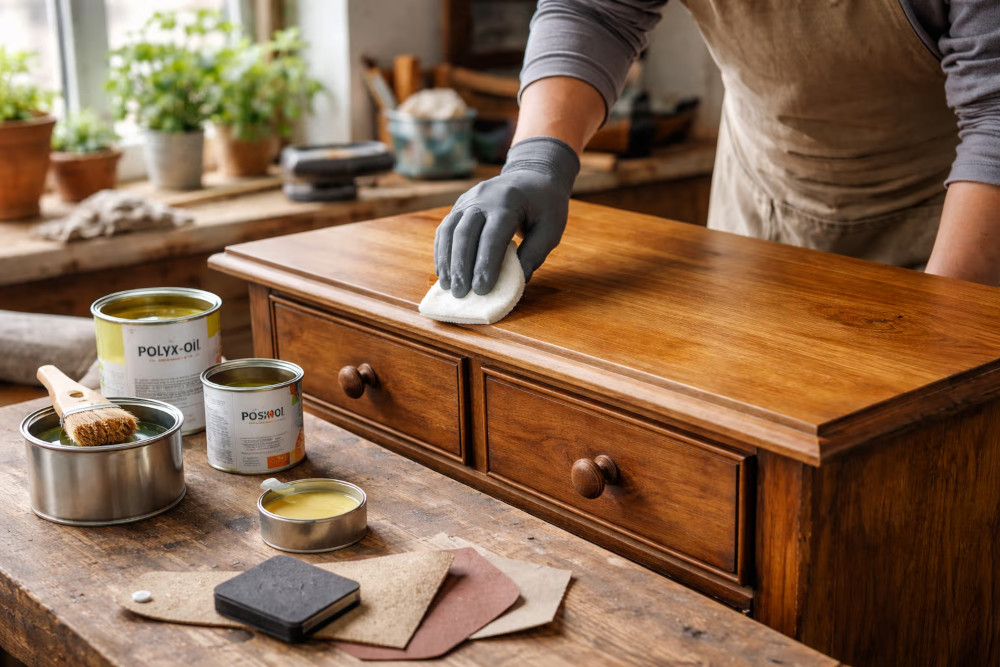
Old wooden furniture often hides a quality that we do not find in modern pieces. Solid wood, honest joints and timeless design deserve more than just being replaced with a new piece. The right coating can not only protect the wood but also bring out its natural grain. It is precisely Osmo oils and waxes that are among the solutions that let you restore furniture to a high standard, ecologically and without unnecessary compromises.
In this article you will learn how to restore wooden furniture step by step, why Osmo is the ideal choice and how to achieve a professional result even at home.
Why restore furniture with Osmo oil and wax?
Osmo coatings are based on a combination of natural oils and waxes, which penetrate the wood and at the same time form a protective layer on its surface. Unlike conventional lacquers, they do not “seal” the wood but leave it breathable.
Main advantages of Osmo coatings:
- they bring out the natural texture of the wood
- they are resistant to abrasion, moisture and stains
- they are easy to repair locally without sanding the whole surface
- they are suitable for interior and exterior use
- they contain no aggressive chemicals
That is why they are ideal for restoring tables, chests of drawers, chairs, worktops and wooden stairs.
How to prepare old furniture for an Osmo coating?
Proper surface preparation is the basis of a coating's long-term durability.
First remove the old lacquer, paint or wax. Use an electric sander on flat surfaces and sand details by hand. The recommended sandpaper grit is:
- coarse sanding: P80-P120
- final sanding: P150-P180
Always sand along the grain of the wood to preserve its natural appearance. After sanding, clean the dust off the surface thoroughly - ideally with a dry cloth or a vacuum cleaner.
How to apply Osmo oil or wax correctly?
Osmo coatings are very easy to apply, but one rule applies: less is more.
Procedure:
- Stir the coating (do not shake).
- Apply a thin layer with a brush, roller or cloth.
- Leave to dry for approximately 8-12 hours.
- Lightly sand the surface with fine sandpaper (P220).
- Apply a second thin layer.
Once dry, the wood remains pleasant to the touch, non-sticky and naturally matt or satin - depending on the chosen product.
Which Osmo product to choose for restoration?
The choice depends on the type of furniture and the load on the surface.
The most commonly used products:
- Osmo Polyx-Oil - a universal oil for tables, chests of drawers and shelves
- Osmo Wood Wax Finish - for changing the shade while preserving the wood grain
- Osmo TopOil - ideal for kitchen worktops
- Osmo Hardwax Oil Rapid - fast drying for time-critical projects
Each of these products provides high protection and a long service life without the need for frequent re-sanding.
What does it cost to restore furniture with Osmo?
Restoring furniture with Osmo is cost-effective. One pack of the product is often enough for several pieces of furniture.
Approximate costs:
- Osmo coating: €25-40
- sanding supplies: €5-10
- DIY application: €0
The total investment is usually below €50, while the result is comparable to a professional renovation.
When is it worth turning to a professional?
With antique furniture, veneered surfaces or badly damaged pieces, a professional can choose the right combination of techniques and products. Even professionals, however, very often work with Osmo coatings, because they make it possible to preserve the authentic character of the wood.
Conclusion
Restoring wooden furniture with Osmo oils and waxes is the ideal solution for anyone who wants to preserve the natural look of wood, extend its service life and at the same time work with eco-friendly materials. The result is not only aesthetic but also practical - the surface is hard-wearing, easy to maintain and timeless.
If you are looking for a way to give old furniture a new life without unnecessary compromises, Osmo is the right choice.