
Building a deck – the foundation
Foundation for a timber deck
How do you build a foundation for a timber deck? The ground the deck will stand on can vary, and the fixing method depends on the type of soil.
Deck on rock or a concrete slab
If you are building a deck on concrete or a rock base, we recommend post shoes fixed into the base with injection mortar. Post shoes set in injection mortar provide an exceptionally strong and durable mounting for the joists, and you can start installing the joists just one hour after fixing the post shoes.
Installation with injection mortar step by step (watch the video): Drill holes in the concrete or rock base. The hole diameter should be larger than the diameter of the post shoe spike. A reinforcing steel spike with a diameter of 14 mm needs an 18 mm hole, a spike with a diameter of 16 mm (for example on the UJ post shoe) needs a 20 mm hole. To give the joint the required strength, thoroughly brush out and blow out the hole before injecting the injection mortar.
With a new cartridge and with every new mixing nozzle, squeeze at least three full strokes of injection mortar (six with a foil cartridge) onto a piece of paper until it is an even grey colour, and only then fill the hole. Inject the injection mortar through the mixing nozzle into the hole from the bottom up.
Then push the post shoe spike into the hole with the injection mortar. The spike will push the excess compound out of the hole.
Remember!
Always follow the instructions supplied with the injection mortar and use the original mixing nozzles supplied with it.

Video by the manufacturer ESSVE, without English subtitles.
Products for installation in rock and concrete
These products give you the best result.


Deck on concrete footings
If you are building a deck on soil with a low load-bearing capacity (sand, clay) or on uneven ground, we recommend cast concrete footings in which you set the post shoes while pouring the concrete.
Tip! The joists are easier to install and level if you use adjustable post shoes.
Products for installing joists
These products give you the best result.


Deck laid on the ground
If the soil under the timber deck is stable and the deck surface is to be just above ground level, loosely laid concrete paving slabs will serve as the foundation. It is important to place insulating pads between the wood and the concrete to protect the wood from absorbing moisture and from rot (see the picture alongside).
How to do it? The video below takes you through the individual steps of building a deck on the ground. Do not forget the insulating pads.
Bear in mind! This type of deck is more sensitive to movement and moisture. That is why you should use screws made of A4 stainless steel, which cope better with larger movements of the structure. For structures standing directly on the ground, we always recommend screws made of A4 stainless steel.
You will achieve the greatest strength by joining the components of the deck base structure with reinforced angle brackets fixed with screws for timber engineering connectors.

Video by the manufacturer ESSVE, without English subtitles.
Products for installing joists on the ground
These products give you the best result.


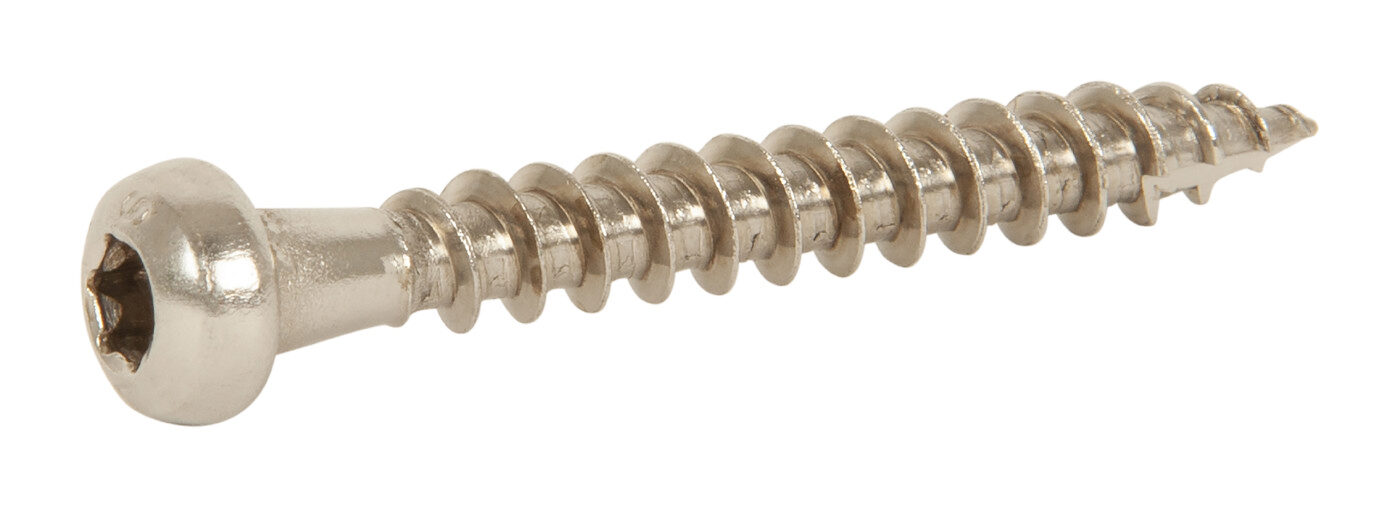
Next steps of the guide:

Fixing the deck to the facade
A deck usually adjoins the wall of the house. The material of the wall and facade determines how, and with what, the joists are fixed to it.

Deck substructure
Once the foundation is finished and the joists are fixed to the walls of the building, it is time to build the deck substructure.
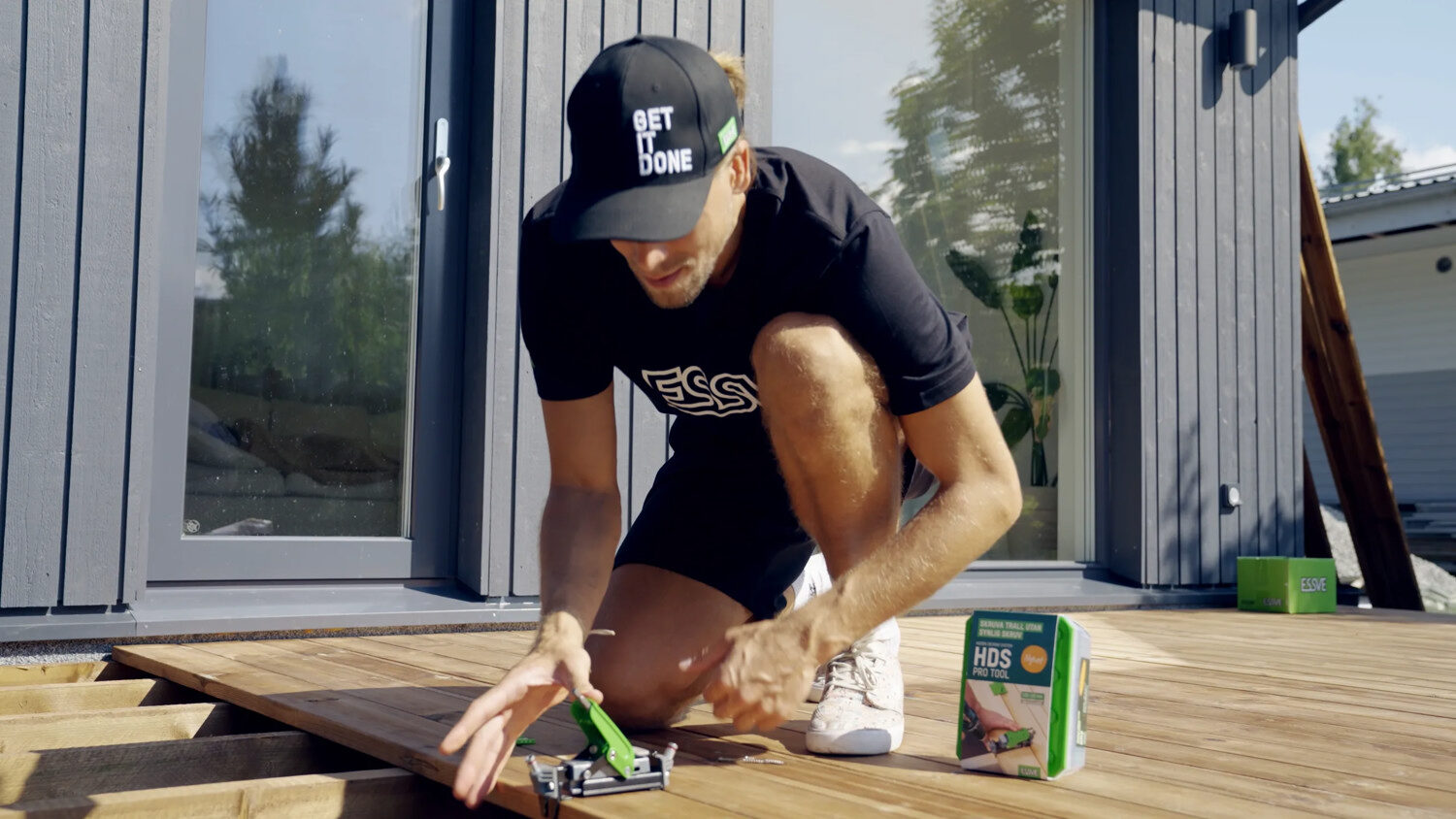
Visible or hidden fixing of decking boards?
Before you start laying the decking boards, you need to choose the fixing method. Traditional fixing with screws driven from the top is the most common, but fixing with hidden screws has also become popular recently.
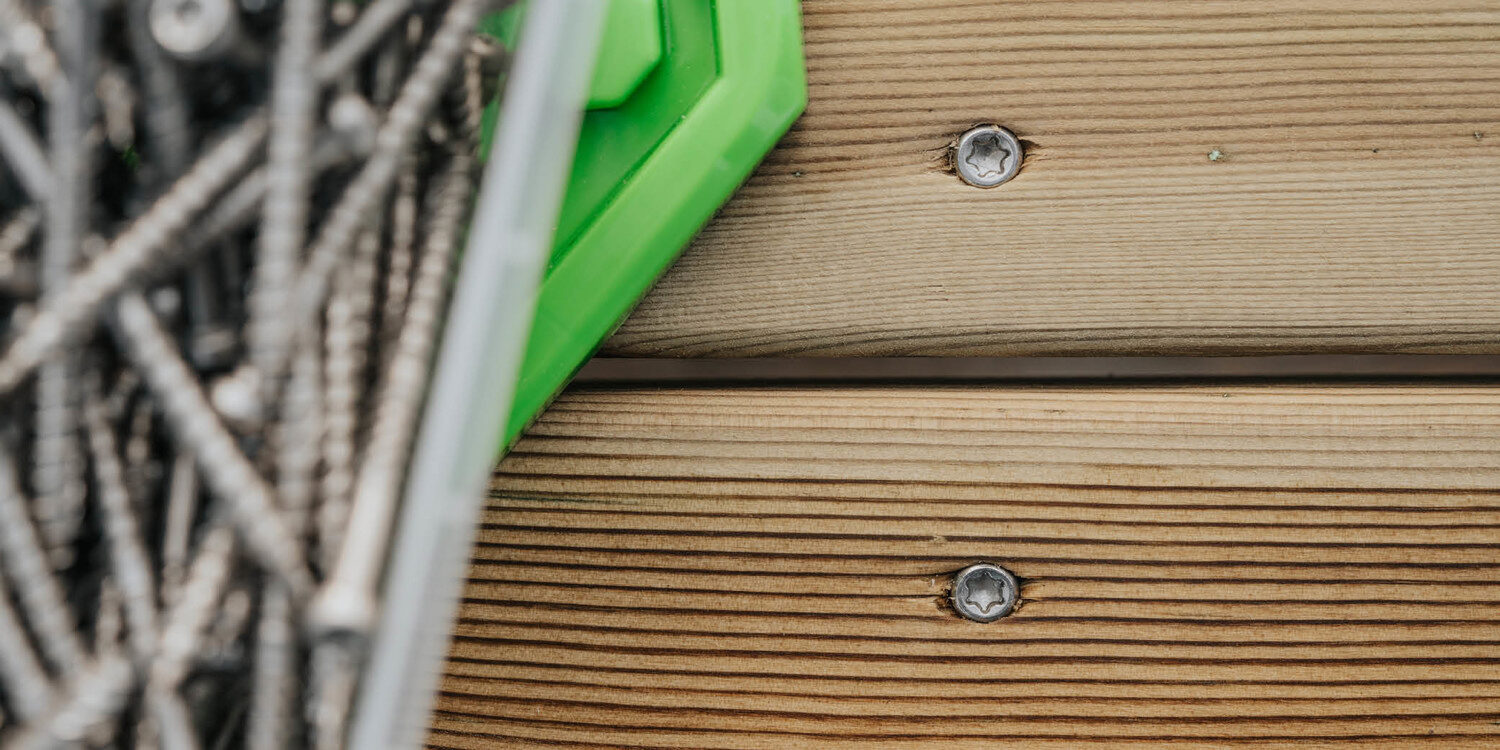
Choose screws of the right quality
For a durable deck, it is important to choose a screw of the right quality with suitable corrosion protection. The choice is affected, for example, by the environment, the type of wood and the type of deck structure.
The information in this guide is for guidance only. Follow the manufacturer's technical data sheet and the applicable standards; if in doubt, contact us.