
Building a staircase – tips from a carpenter who makes stairs
How a staircase is made
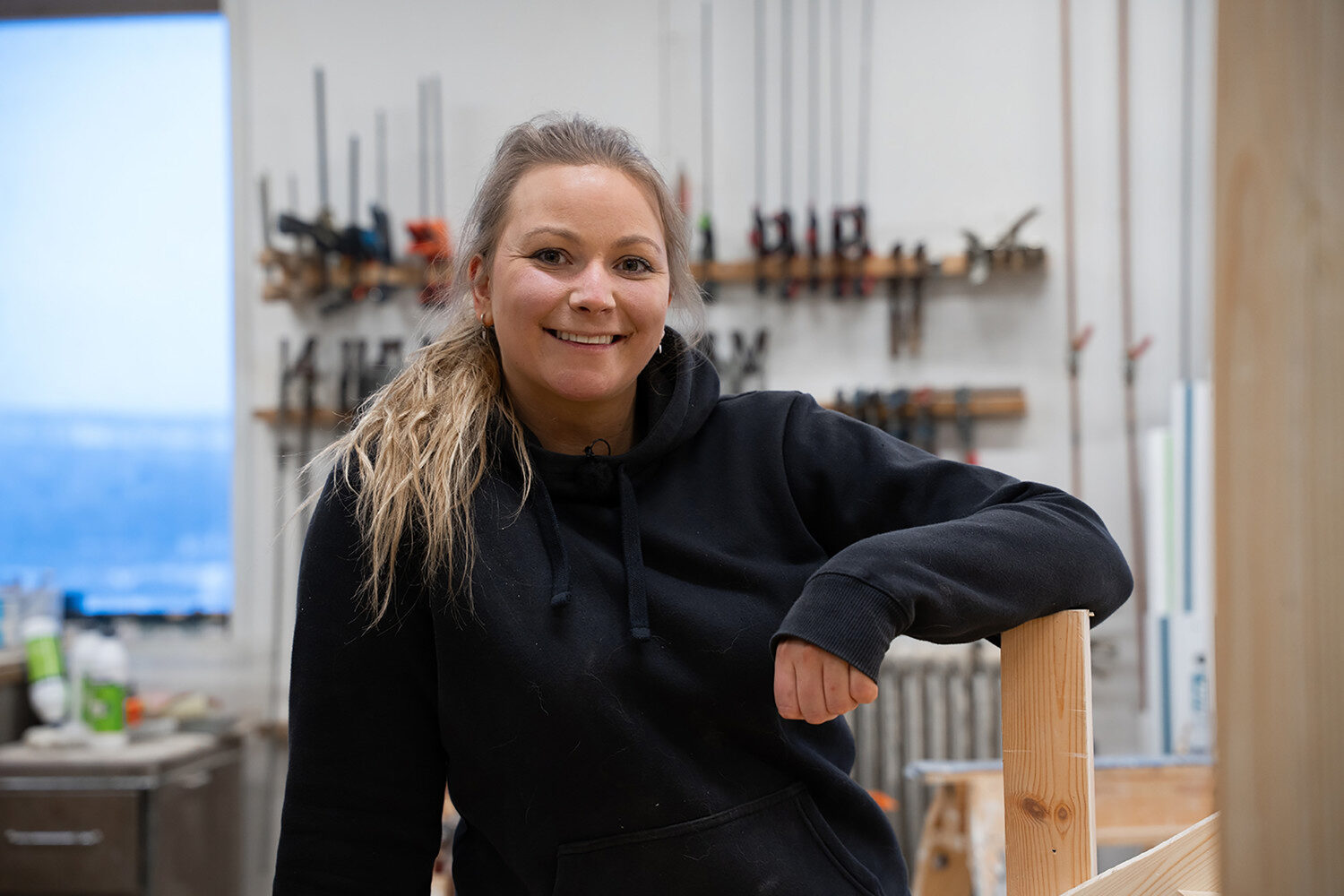
Swedish carpenter Julia has built more than 200 staircases in her workshop in the village of Löa. This is her story and her best tips for building a staircase.
From potato cellar to joinery workshop
At just 15, Julia Ardesjö built her own house on her parents' forest land. A little over 15 years later, she is a successful carpenter specialising in staircases.
– It is an amazing feeling to deliver a staircase built from timber from my own forest. The next step is a completely green workshop where all the machines will be powered by solar panels.
It was only after working in her father Torbjörn's joinery workshop that Julia Ardesjö reconsidered her childhood dream of becoming a radio presenter. Suddenly, only wood existed for her.
– It completely absorbed me. The smell, the feel in your hand and the fact that every board is like a blank sheet of paper. It was clear to me that I would follow in my father's footsteps and make something that would grace a house for 200 years. After three years at an upper secondary school specialising in woodworking in Örebro and another four years in Norway, where she earned her start-up capital, Julia founded her company J.A Trappsnickeri. To this day it is based in the potato cellar that her father Torbjörn converted into a joinery workshop in the '80s.
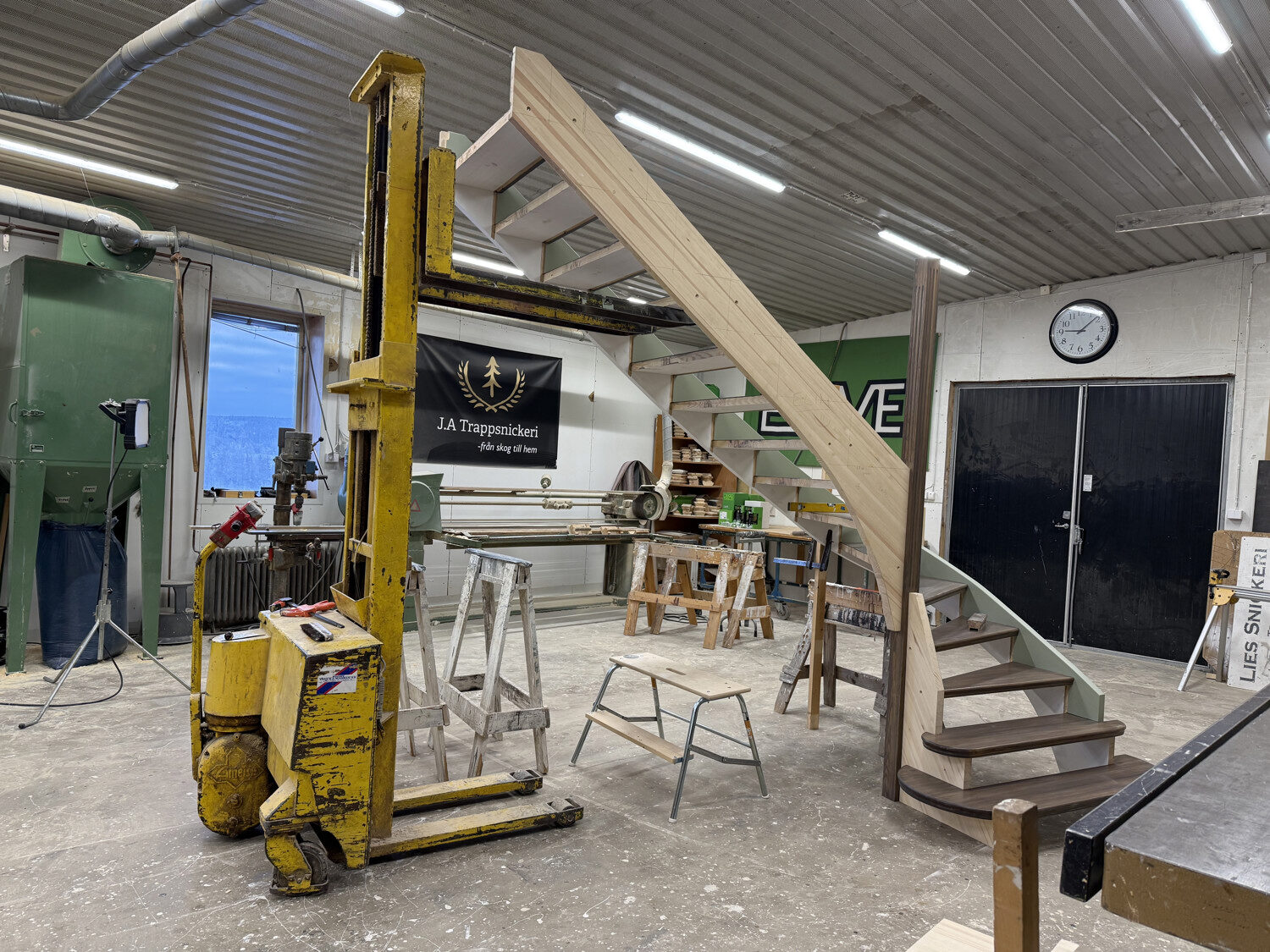
– The space is almost entirely underground, so it has the same temperature all year round and the wood does not crack. It also has a very high ceiling, which is perfect for the large turn-of-the-century style staircases that I often build to order.
Video by the manufacturer ESSVE, without English subtitles.

Everything is painted by hand with a brush
Although Löa is a small village with only about a hundred inhabitants, it has three joinery workshops making staircases. What sets Julia apart – more than being a young woman – is that she does absolutely everything by hand and takes most of the timber from her own forest. At first she worried that nobody would want to buy a staircase from a young girl, but it turned out to be exactly the opposite.
– At the beginning I approached newspapers myself and told them that I was taking up a dying craft. Let us just say that getting publicity was not hard. And after a full-page article in the Swedish national magazine Land, the customers came flooding in. Since then I have kept talking about my work on social media. That is where most of my customers find me today.
Asked whether a ‘Julia staircase’ could be recognised at first glance, the answer is ‘probably yes’.
– The customer naturally has a say in what the staircase looks like, but what is typical for me is solid, finely detailed wooden staircases in pine treated with a white-pigmented hardwax oil. Preferably with newel caps of my own design and steps with a rounded nosing, the so-called S-profile. And of course everything is painted by hand with a brush.
Can you build a staircase yourself?
Building a staircase from scratch is not quick; it takes 3 – 6 weeks. And Julia does not like to compromise on craftsmanship.
– But with the right tools and clever fixing you can save a lot of time. With wood adhesive Snabb I do not need to put the parts in clamps and wait for them to dry for a long time. And with ESSTACK adhesive I can press on details that need to grab immediately. Another trick is that I have replaced large nail guns with the ESSVE screw for mouldings and floors. It is a slim screw that pulls like a dragon. The small head means minimal filling and a short drying time.
But can you really build a staircase entirely on your own?
– Yes and no. The manufacturing itself takes place in the workshop on my own, but for the final installation I often bring in extra muscle.
The build begins with Julia visiting the customer, measuring the space and checking that the chosen model will fit in the house. Back in the workshop she then makes all the parts and assembles the structure up to the top step to check that everything is level.
– Even though I go to the gym a bit, you have to be inventive with the weight. Among other things, I use a forklift to help me. My body is my most important tool and it has to last for many more years.
Julia's advice
Tips for building your staircase
Are there golden rules for the width, height and depth of steps?
– For a staircase to be comfortable and safe to walk on, the going and the rise of a step must be in a certain ratio. The rise of a step, i.e. the height difference between two treads, should be roughly 17 – 20 centimetres. No staircase should have more than 18 steps without being interrupted by an intermediate landing. (Slovakia has a stricter limit: under Decree No. 532/2002 Coll., a single flight of stairs may have no more than 16 steps, and an auxiliary staircase no more than 18. The binding step dimensions are set by STN 73 4130.)
Which wood is the easiest to work with?
– Pine, that is a fantastic wood. Lighter than oak, harder than spruce and it sands well. With a surface finish it can be made extremely hard-wearing.
What staircase trend do you think is coming?
– White-pigmented steps will remain popular, but now we are starting to see American influences, staircases that take up space. Massive newel posts and large landings with room for furniture or at least for some proper vases. Staircases in bold colours are also starting to appear.
What is most important in contact with the customer?
– That it is joyful and pleasant. I would rather work on a small scale and with the right people.
Julia's favourite products
Products that make installation easier and create durable staircases
 ESSVE Wood adhesive Rapid 475 ml
 ESSVE Wood screw ESSDRIVE 5.0 x 60 mm FS EZP, pack of 100
 ESSVE Screw for skirting boards/plinths/floors with small head for wooden and steel profiles, yellow chromate, lacquered head 3.9 x 42 mm white, pack of 400
 ESSVE Construction adhesive ESSTACK NORDIC PRO 290 ml white, pack of 6
 ESSBOX+ Organiser case for screws and tools
Take a look inside other workshops
On our Swedish YouTube channel Helt Skruvat, carpenters open the doors to their workshops
The information in this guide is for guidance only. Follow the manufacturer's technical data sheet and the applicable standards; if in doubt, contact us.