
ESSVE chemical anchor – use, installation and fixing parameters
Chemical anchor – questions and answers
ESSVE offers a wide range of chemical anchors that provide durable and strong fixing. In this article we answer the most frequent questions to help you choose the most suitable anchor for your project.
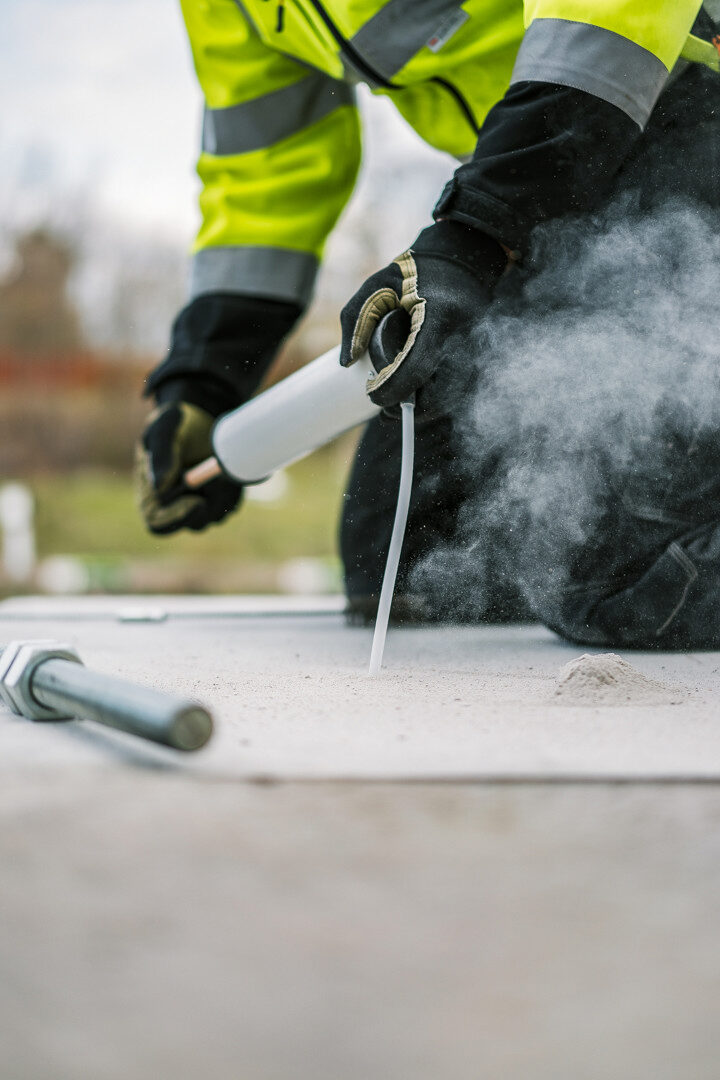
When is it worth using a chemical anchor?
The chemical anchor is the ideal solution for fixing into materials such as concrete, natural stone, hollow brick or blocks. It is an extremely strong and durable chemical fixing that also proves itself in demanding conditions, for example when installing railings or other elements at the edge of a balcony slab.
Can a chemical anchor cause staining?
With ESSVE chemical anchors such as ESSVE ECM or ESSVE ONE-ICE, the risk of staining facades and natural stone is minimal. However, if you want to be sure, test the product on the specific material before use. After the test, wait 1 – 2 weeks for the final result to show.
What is a chemical anchor?
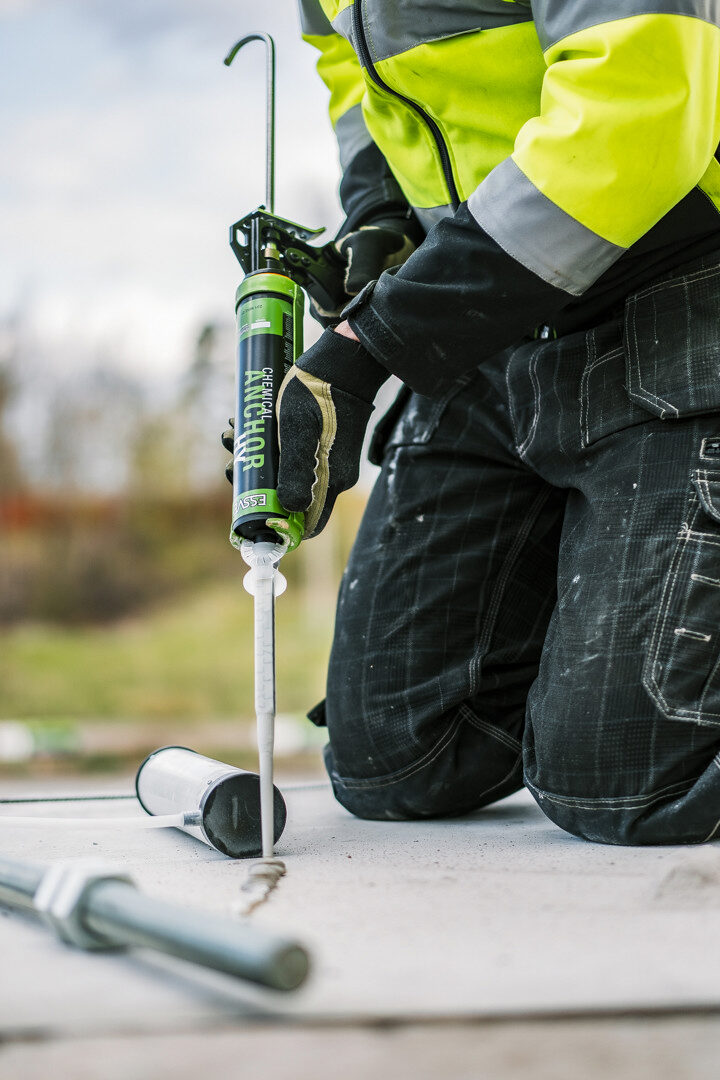
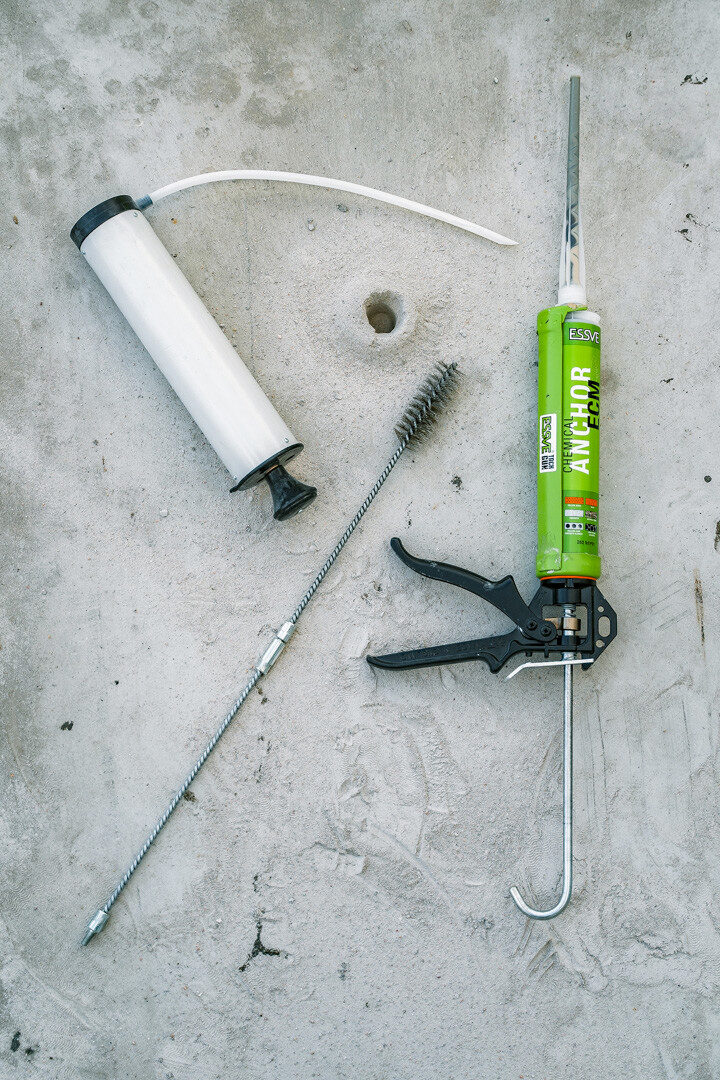
A chemical anchor is a product made of two components which, once mixed, form a strong and durable compound. Chemical anchors are supplied in cartridges with separate chambers for the two components. After the components are mixed, the mixture cures and forms a strong fixing.
When applying a chemical anchor, it is important to first dispense a few shots of compound outside the anchor hole until the components are fully mixed – only then fill the hole. If the compound is not mixed well, it will not cure.
Does a chemical anchor work in holes drilled with hammer action and by core drilling?
Most ESSVE chemical anchors are suitable for holes drilled with hammer action, but only some products can be used in core-drilled holes, because the smooth surface of core-drilled holes reduces adhesion. Also keep in mind the permitted working temperature, especially when installing in hot environments, for example on heated walls or in production halls.
What affects the performance of a chemical anchor?
Many factors can affect the anchoring compound, so study the supplier's documentation carefully. Threaded rods are supplied zinc-plated, hot-dip galvanised and in stainless steel. With some compounds, reinforcing bars may also be used.
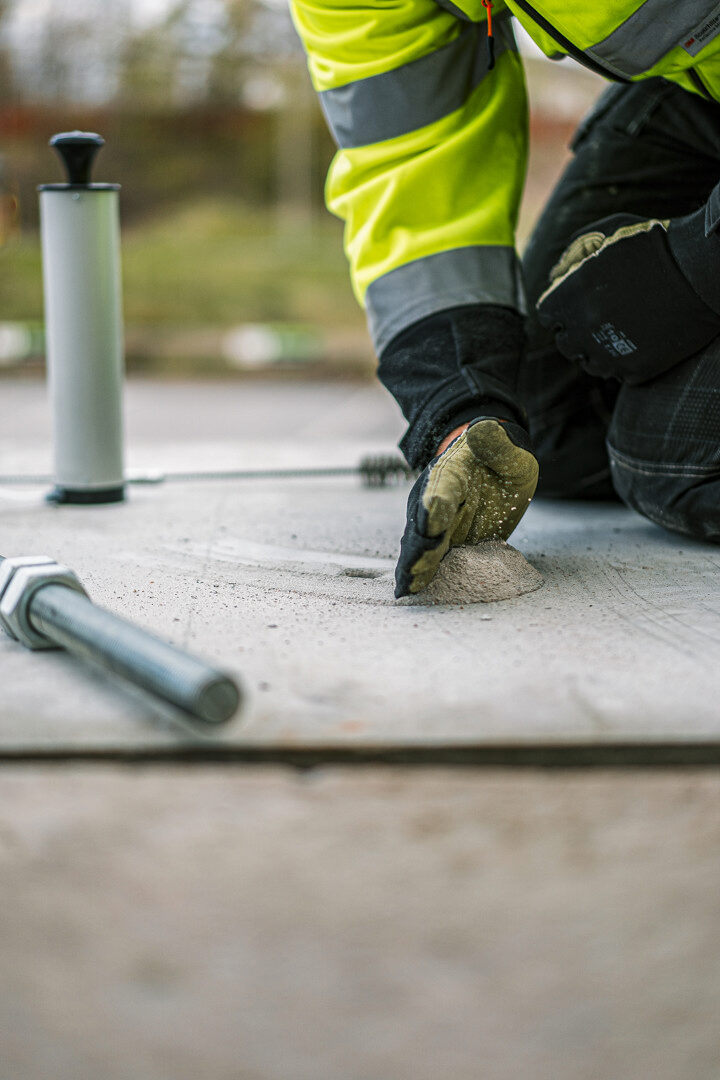
What is a chemical anchor best suited for?
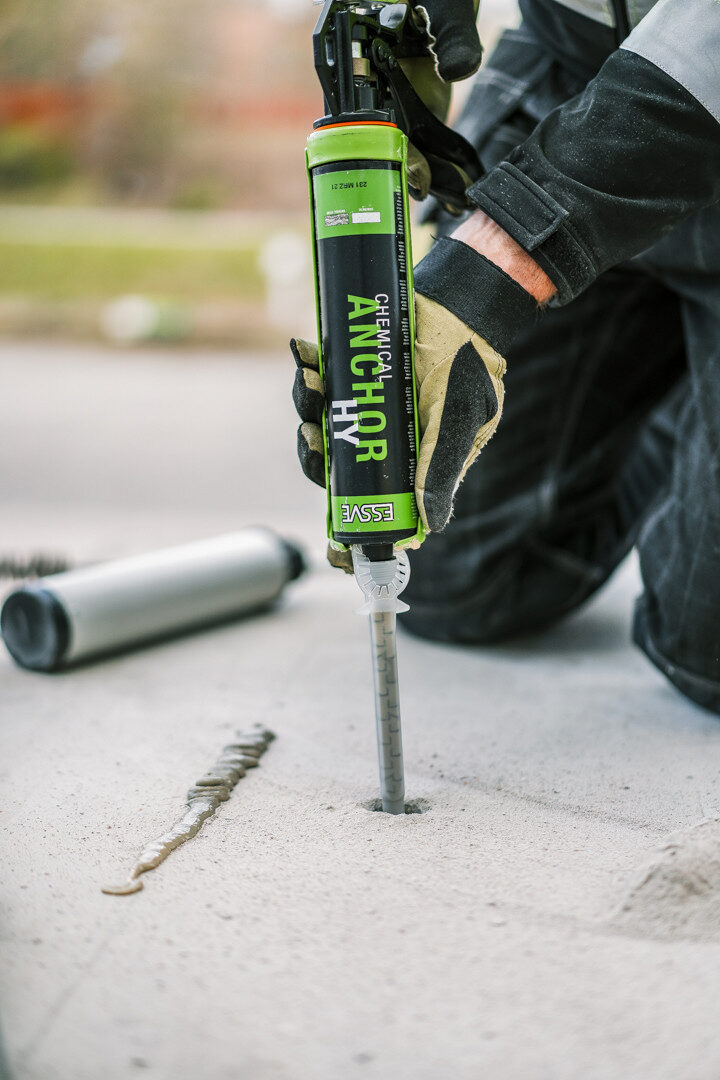
Chemical anchors are used for fixing threaded rods, double-ended studs, machines, steel beams, columns, railings, masts and many other elements into concrete and other building materials. They are the ideal solution for durable installation in a wide range of conditions.
Our chemical anchors and accessories
Universal solutions for most applications


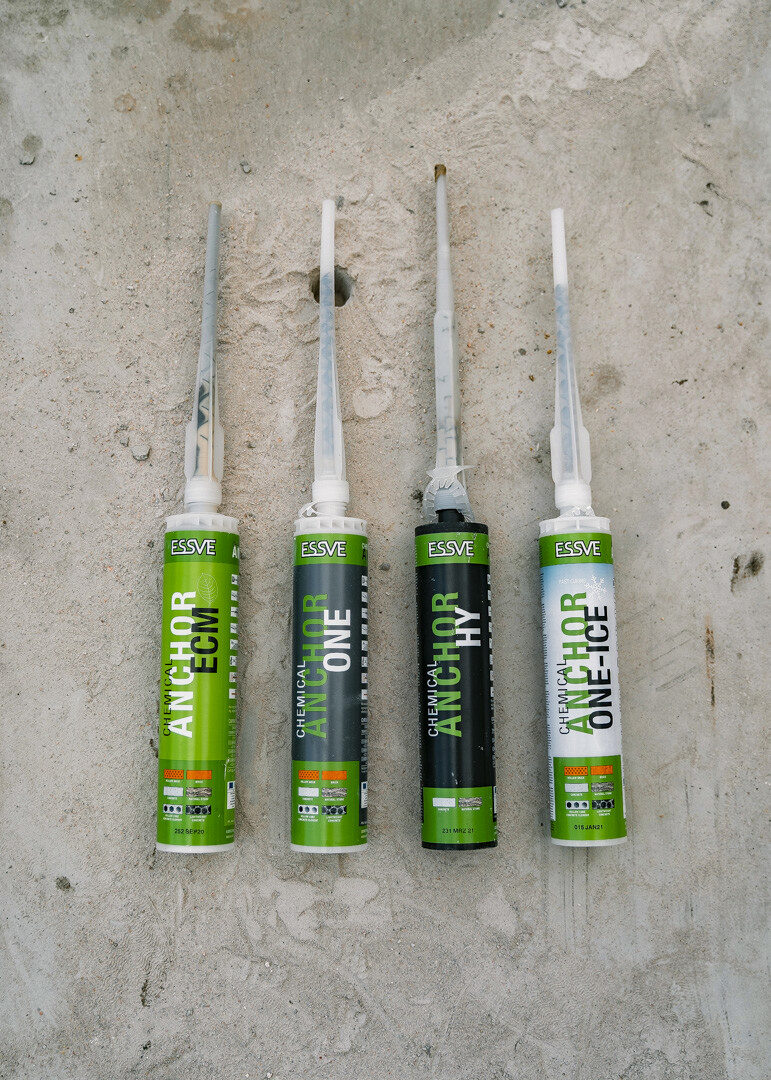
Which product should you choose?
ESSVE ECM
An affordable chemical anchor suitable for low-density concrete including lightweight concrete (e.g. Leca, Ytong, Siporex) and for facing stone.
ESSVE ONE
A universal anchoring compound, ideal for concrete (cracked and non-cracked), masonry and facing bricks. A universal product suitable for most installations.
ESSVE ONE-ICE
A fast-curing version of ESSVE ONE for use at low temperatures down to −20 °C.
ESSVE HY
An extremely resistant hybrid compound for the most demanding fixings in cracked and non-cracked concrete, for example for bridges, cranes, crossbeams, hydraulic and harbour structures and wherever exposure to chemicals is a risk. It is also used in load-bearing structures (post-installed rebar).
Permissible load and technical data
If you are calculating with a different concrete class or different edge distances and spacings, contact Zrubko.sk – we will help you with the calculation and arrange access to ESSVE CS, the manufacturer's calculation software.
The information in this guide is for guidance only. Follow the manufacturer's technical data sheet and the applicable standards; if in doubt, contact us.