
The right deck lighting
Deck lighting – cosy and safe
Good deck lighting creates an impressive, cosy setting in the summer months and improves safety on darker winter evenings. Here are some deck lighting tips from the experts at Hide-a-lite.
1. Collect ideas and inspiration
It is a good idea to think about lighting right at the start of the build. That is when you have the best conditions for making it effective.
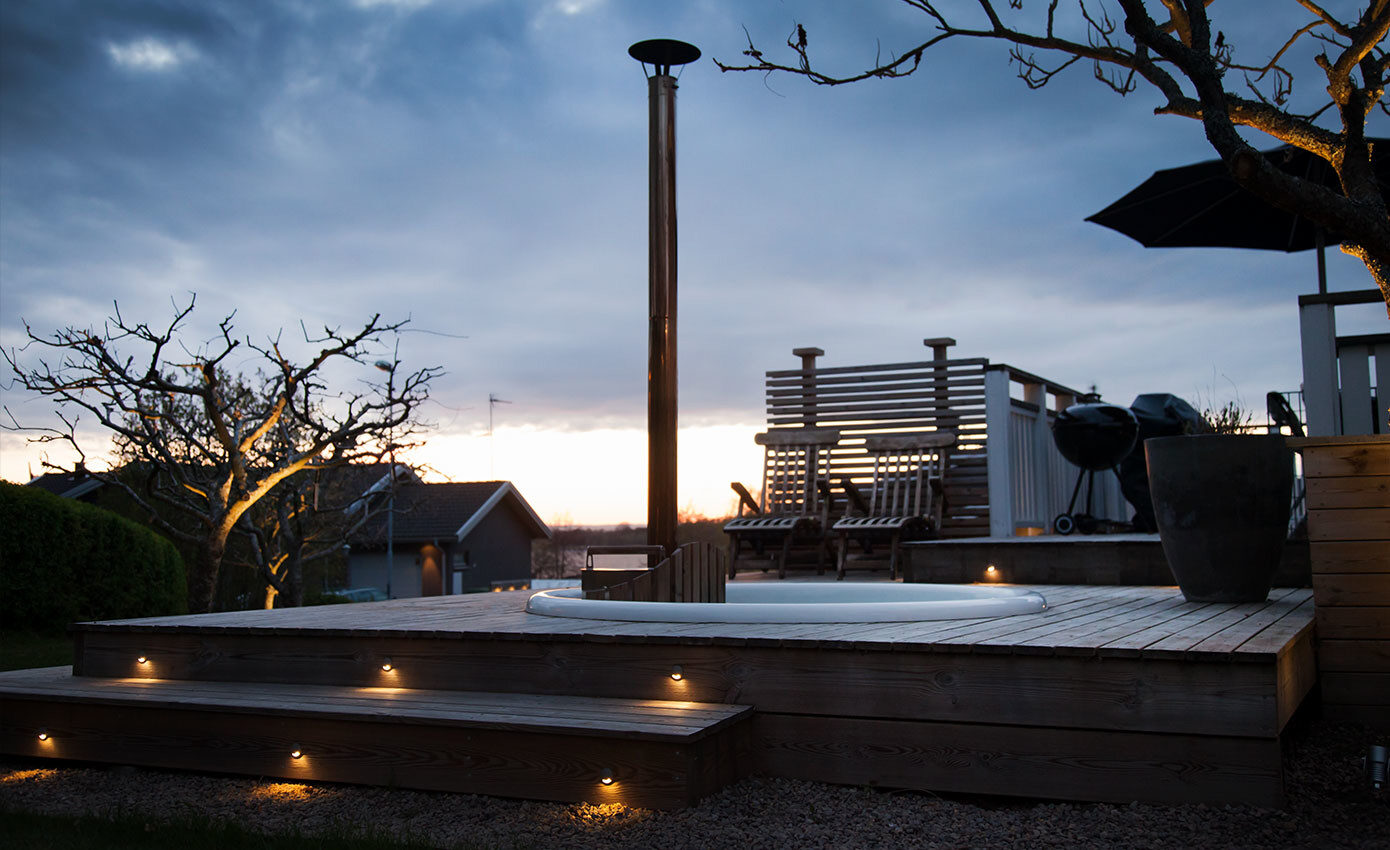
There are many ways to light a deck. You can choose from recessed deck lights, wall lights, step lighting or lighting under the railing. If, following the current trend, you have built a pergola along the deck, you can light the pergola instead of placing lights around the edge of the deck. That way there is no risk of dazzling anyone sitting on the deck.
Take your time to collect inspiration and ideas. Go for a walk and see how other people have lit their decks. You can also find inspiration on social media!
2. Before you start, think about this
Deck furniture
What furniture do you already have on the deck? Do you want to change anything? If so, do it before you start planning the lighting. Think ahead, for example, about whether the lighting ends at the wall next to the barbecue. Only once the furniture is in its final position should you decide which spots will be lit.
Built-in deck lighting
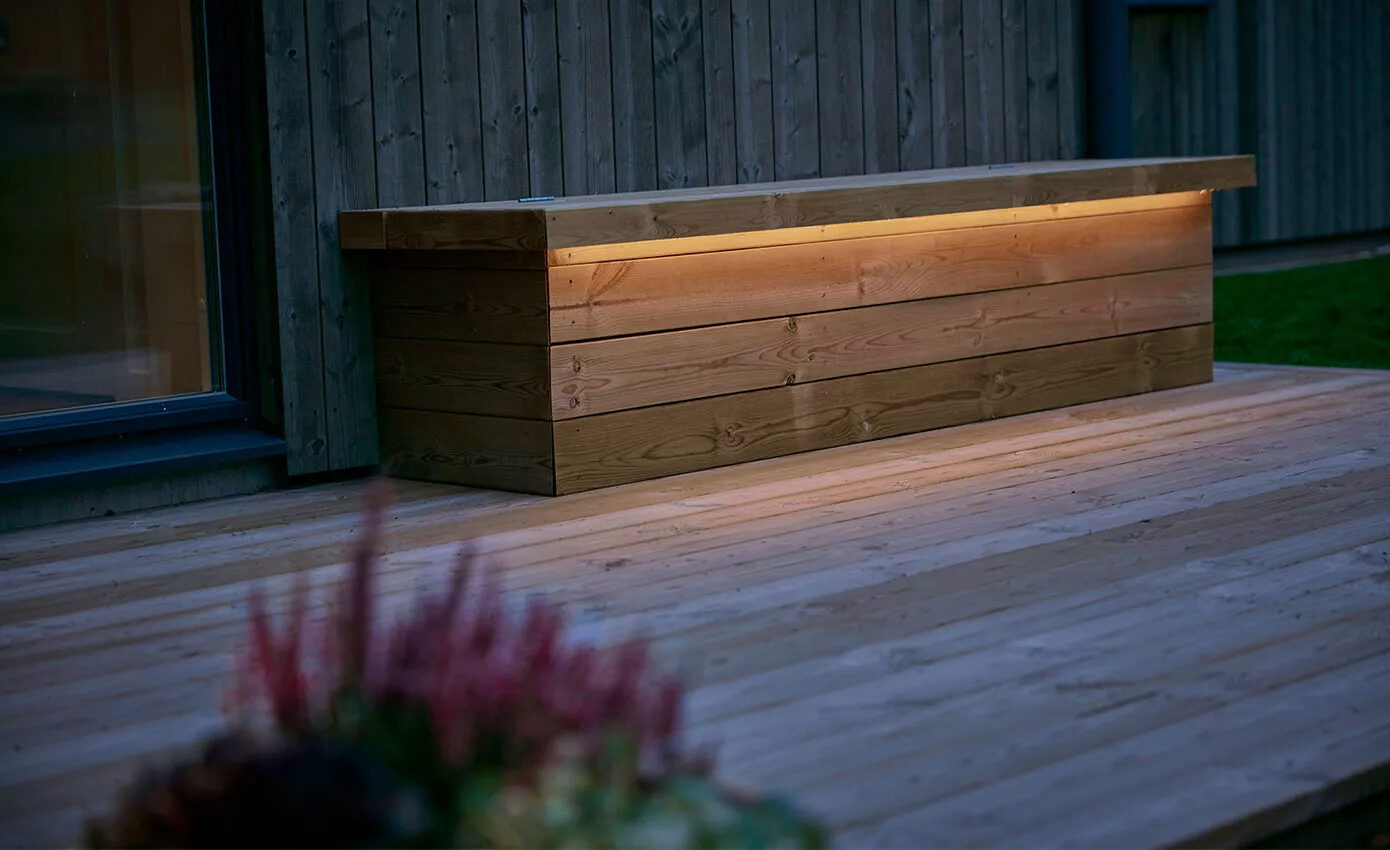
Find out what options there are for concealing IP67-rated LED strips in furniture, railings and other features. LED strips let you create many impressive effects. How about matching the lighting to the railing and steps? Or placing it by the seating, as in the photo, where the lighting is hidden under a bench.
3. Function versus aesthetics
Functional outdoor lighting
In any space you light, it is a good idea to start where light is needed most. This is called functional light, and its job is to guide visitors – much like road signs when you are driving. You can create this kind of lighting with facade lights, for example.
Decorative outdoor lighting
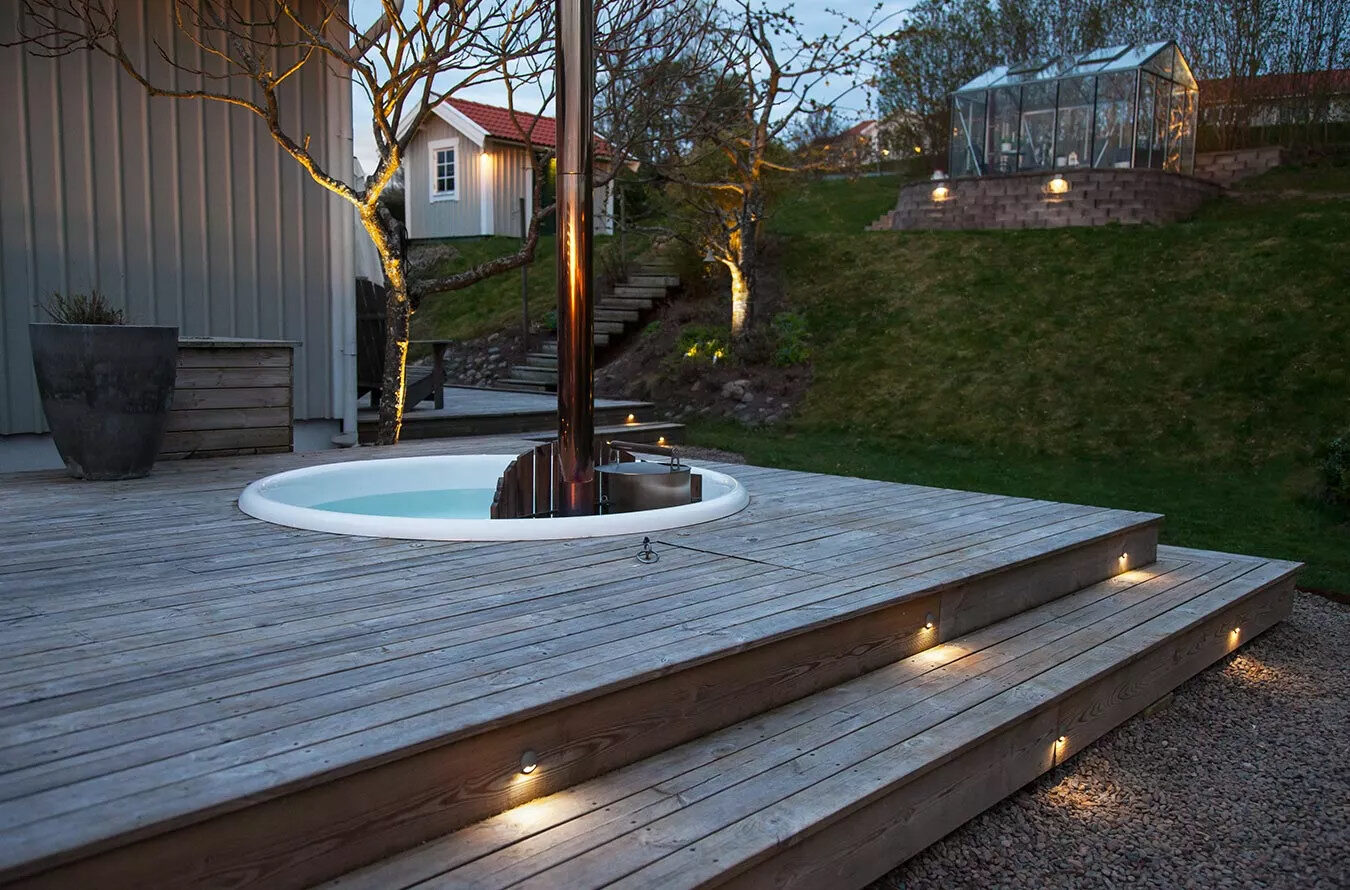
Decorative lighting creates “rooms within a room” and highlights what makes a space unique – in this case the deck. Decks are often lit with deck lights, or ground spotlights are aimed at a nearby tree to make it stand out.
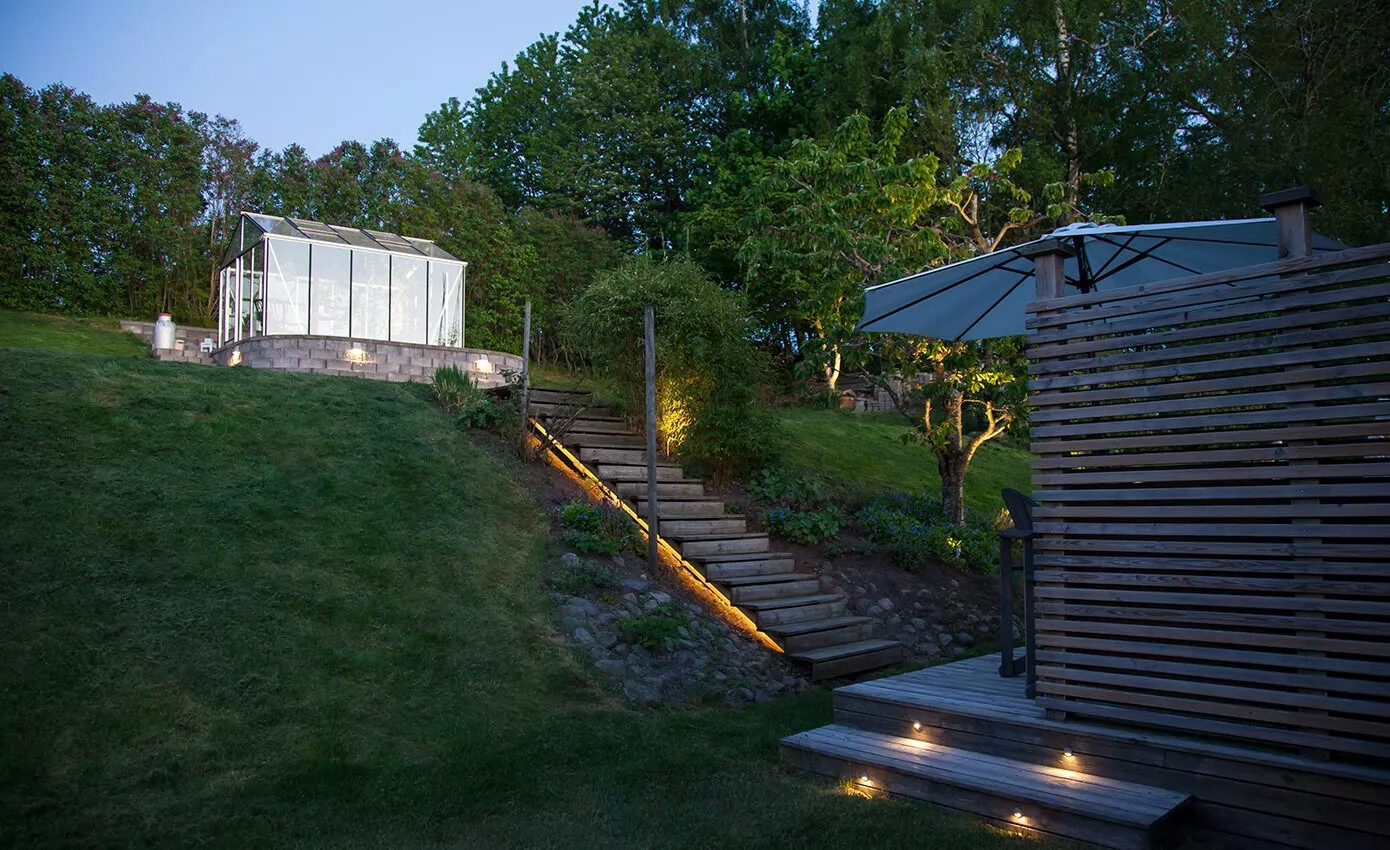
Sometimes functional and decorative lighting go hand in hand – lighting for steps or paths, for example, can be both decorative and functional. In principle, any type of light can be used both practically and decoratively.
4. Test the lighting
Before installation, always test the lighting with loose lights placed at different spots on the deck. This lets you find out, for example, how far apart the light points should be, or whether you want to try light that runs along the wall.
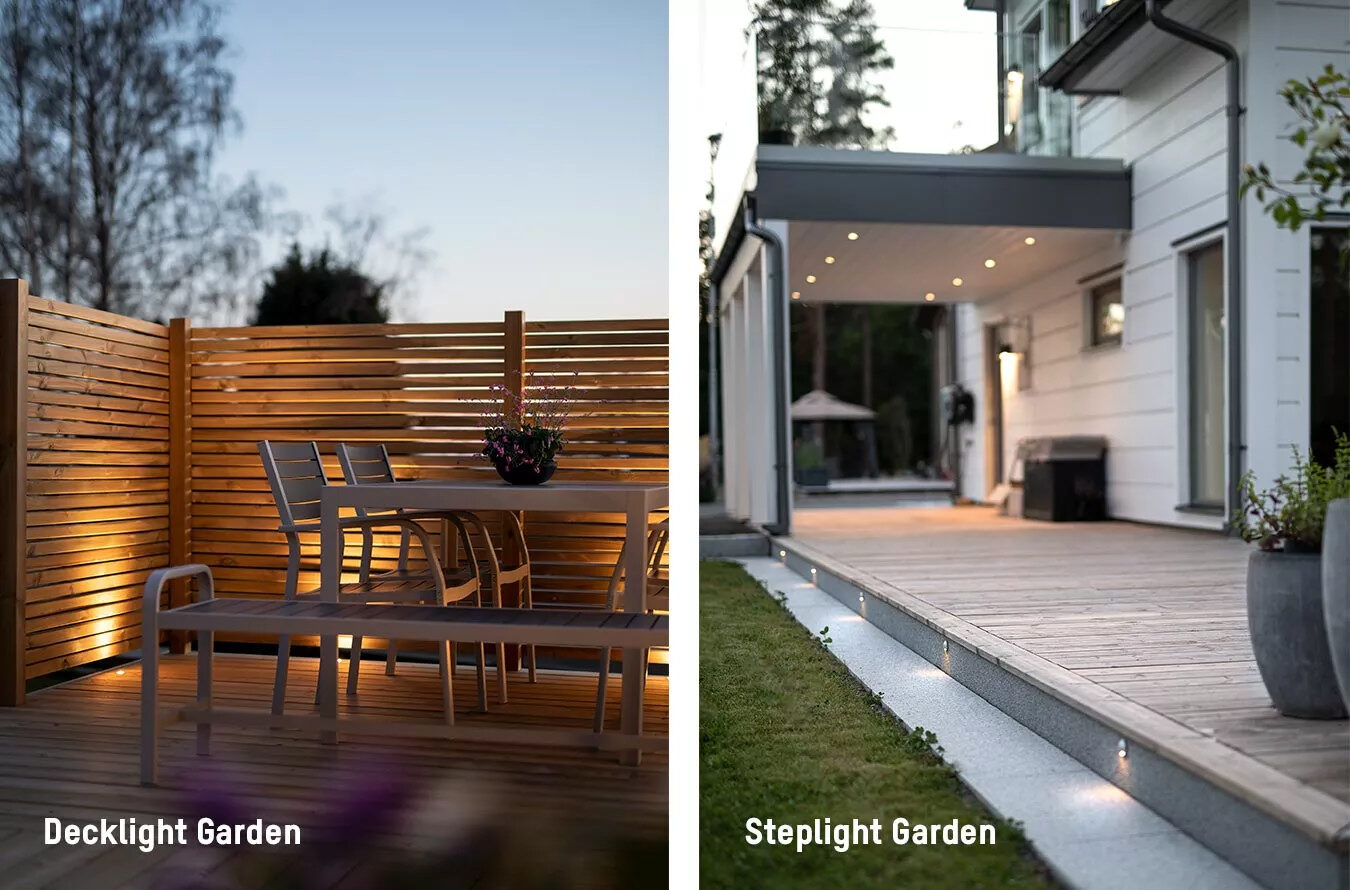
- Decklight Garden decorates wooden flooring and lights up the facade or the deck railing. Try several spots before you decide where to install the lights. You can also light the space between the posts – from outside this creates a nice effect without dazzling your neighbours or passers-by.
- Around a timber deck you can place Steplight Garden lights, which highlight the steps, frame them and accentuate the space. Try placing them at different heights and spacings to find the best solution for your deck.
5. Installing the lighting
Once you have decided how you want to light the deck, it is time to install it. Always leave the electrical installation of deck lighting to a qualified electrician.
Remember!
Consult a qualified electrician at the planning stage so that you know what can be done during installation. This applies to new builds and existing buildings alike.
The information in this guide is for guidance only. Follow the manufacturer's technical data sheet and the applicable standards; if in doubt, contact us.