
Universal plugs for different materials
Plugs for different materials – this is how the universal plug works
Choosing the right fixing is not just about choosing the right plug. The conditions matter too.
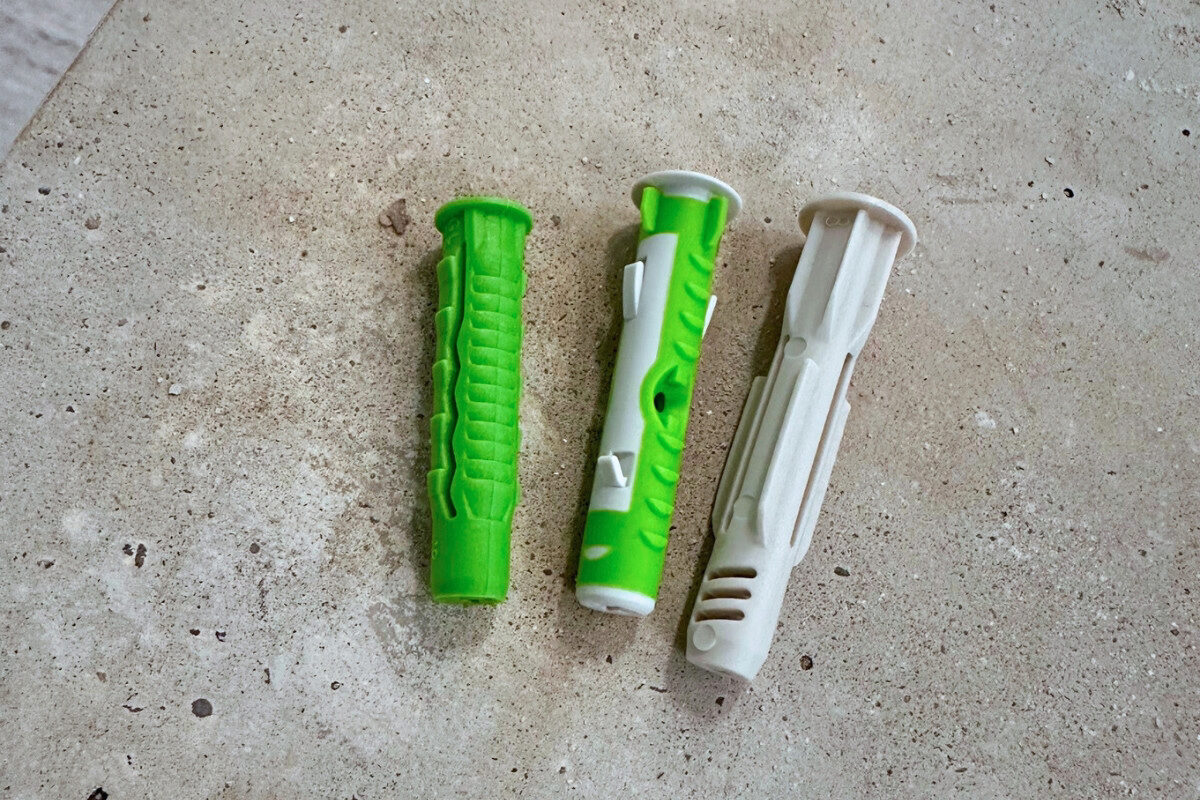
Adapts to the substrate
The properties of the building material, the load and the installation conditions determine whether the result will be safe and durable or will deteriorate over time.
During installation you often come across different substrates, sometimes even within a single project. The universal plug adapts its function to the structure of the material and holds reliably in many types of substrate.
The universal plug is a practical choice when the substrate is varied and you do not know in advance what material it is made of. ESSVE offers three types of universal plugs: the universal plug, Multifix and Greenfix. Each has different properties, but all of them are high-quality and reliable in hard, porous and hollow materials.
When to use plugs?
- In brittle, hollow or porous material
- In hard materials
- In unknown material
- For relatively light loads
Plugs are used when direct fixing, i.e. installation with a screw alone, is not enough. If the substrate is brittle (lightweight concrete, natural stone, plaster, ceramic tiles and clinker), hollow (perforated brick, but also a cavity behind a surface layer, e.g. drywall), porous (Leca expanded clay blocks, Ytong or Siporex lightweight concrete blocks) or of unknown structure, a plug helps to distribute the load and ensures a safe fixing. Even in relatively hard materials (concrete, solid brick), a plug can be a convenient alternative, because apart from a drill and a cordless screwdriver you do not need any special tools for the installation.
Plugs are used when the load is relatively light and the fixing is neither load-bearing nor safety-relevant. Examples include hanging a mirror, smaller wall shelves, curtain rails, lighter light fittings or towel ladders and the like.
When not to use plugs?
- For heavy loads
- For safety-relevant installations
For heavy loads or safety-relevant installations, remember that universal plugs do not replace concrete anchors or chemical fixing (chemical anchor). Mechanical and chemical anchors are developed for heavy loads and for installations where proven strength is required.
When fixing to concrete, keep in mind that the load-bearing capacity can vary considerably depending on the quality, age and execution of the concrete. See our overview of installation methods in concrete, where we go through common applications in concrete. ESSVE concrete anchors are designed for fixing into concrete, natural stone, brick, perforated brick and perforated blocks.
A plug that adapts to the material
In solid materials such as concrete, brick and lightweight concrete, the plug expands in the hole. The expansion ensures high friction against the substrate and creates the conditions for good strength even under heavier loads.
In hollow materials such as perforated brick, the universal plug works completely differently. Instead of expanding, it forms a firm knot, so the load is distributed over a larger area. The result is a stable fixing even in materials with low inherent strength.
The anti-spin wings prevent the plug from turning in the hole, and the collar stops it from going too deep into the hole. The result is fast and safe installation in a wide range of building materials.
Correct installation from the start – for a safe fixing
If you know the building materials, the load, the surrounding environment and the installation conditions, choosing fasteners is easier and safer. The ESSVE range is developed to meet the requirements of professionals – whether for light or heavy installation, and regardless of the building material the element is fixed into.
A few common mistakes
With the wrong drill bit diameter, the plug does not get enough grip and cannot expand or anchor properly in the substrate. The result is lower strength, even if you use the right plug and screw.
Check on the packaging which screw sizes fit the chosen plug – the best choice is the largest permitted size. Choose the screw length so that the entire thread of the screw passes through the plug.
With brittle materials such as ceramic tiles and clinker, too small a distance from the edge or between fixing points can cause the substrate to crack more easily or lose strength.
|
Variant |
ESSVE universal plug |
Multifix |
Greenfix |
|
Best for |
Standard fixing in common materials |
Maximum strength and demanding conditions |
High load-bearing capacity even in unknown material |
|
Material |
Polyethylene |
Nylon |
More than 80 % recycled nylon |
|
Collar |
Yes |
Yes |
Yes |
|
Anti-spin wings |
Yes |
Yes |
Yes |
|
Performance |
Reliable load-bearing capacity |
Maximum load values |
High load values |
|
Installation environment |
Solid and hollow materials: concrete, natural stone, brick, lightweight concrete, expanded clay aggregate concrete, hollow blocks and boards |
Solid and hollow materials: concrete, brick, lightweight concrete, expanded clay aggregate concrete, hollow blocks, boards |
Solid and hollow materials: concrete, brick, lightweight concrete, expanded clay aggregate concrete, hollow blocks, boards, unknown material |
|
Choose when you need |
Medium loads |
Maximum strength |
An eco-friendly alternative |


