
Building a deck – installing the boards
Correct installation of decking boards
For a timber deck to last, the boards must be installed correctly. You need to keep the right spacing between the boards, position the screws correctly and note which way the growth rings curve in the cross-section of the board – where possible, the board is laid heart side up.
Properties of wood
Wood is a living material that swells and shrinks throughout its service life as humidity and temperature change. If the deck is to last, you have to allow for this nature of wood – and that is exactly why correct installation of the boards is so important.
If the boards are laid too tightly, there is a risk that they will eventually push out of the structure or press against each other, lift and pull the decking screw partly out. If the spacing is too wide, on the other hand, the gaps between the boards will be unnecessarily large in dry periods.
Both situations are easy to avoid with correct installation. Below you will find installation instructions drawn up by the Swedish wood industry organisation Svenskt Trä.
1. Protect the deck structure from moisture
When building the supporting structure, remember to protect from moisture all parts of the deck that are in contact with the soil, the foundations and the building the deck adjoins.
2. Treat the cut ends of the boards
Even though it takes a little more time, the result will be considerably better if you treat every cut in a board. Use a penetrating primer oil.
3. Lay the board the right side up
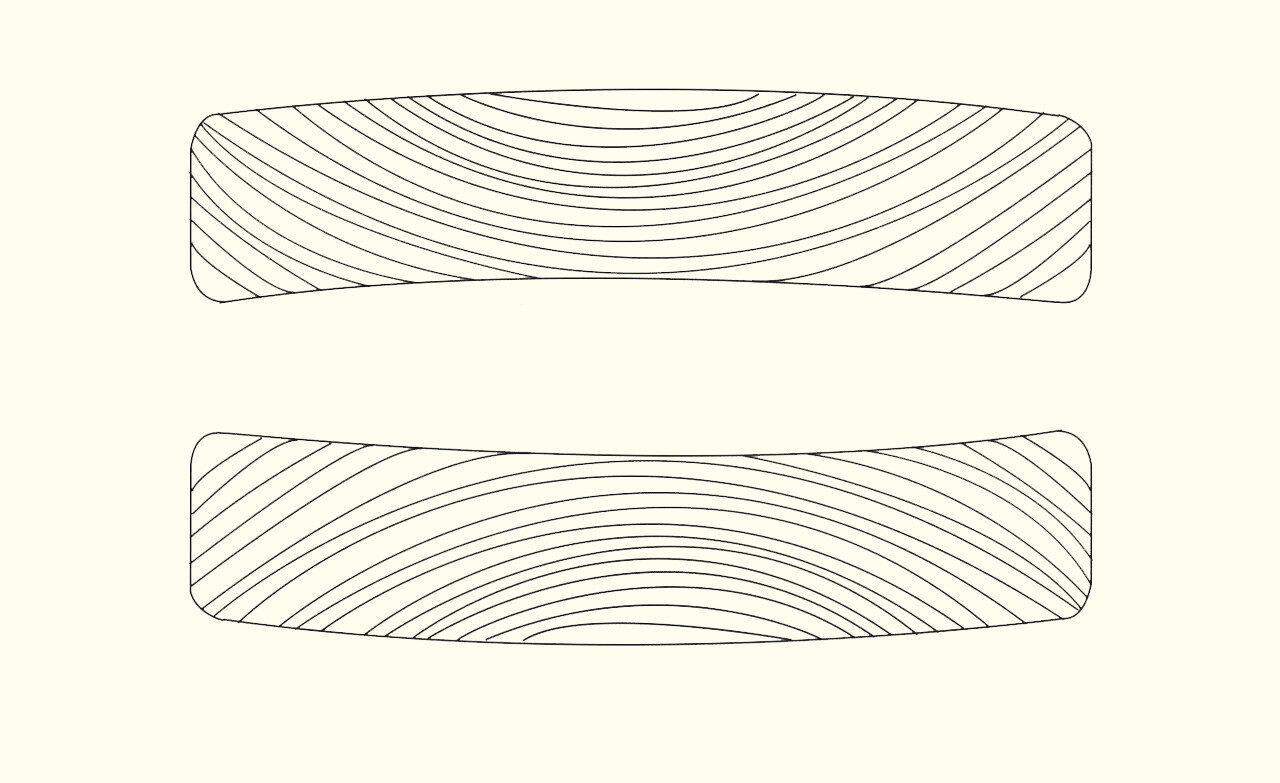
Note which way the growth rings curve in the cross-section of the board – where possible, lay the board heart side up. Over time the top face of the board will then take on a slightly convex shape and shed water better.
4. Keep the correct spacing between boards
It is hard to estimate the moisture content of the wood delivered to site. That is another reason why correct installation of the decking boards is so important for the durability of the deck.
The spacing between the boards depends on their width and on the type of wood. You will find all the dimensions in table 3 on the Svenskt Trä website.

5. Lay the boards in straight lines
Before laying, measure the width of each board, because it can vary with the moisture content of the wood. For a neat result, all the boards in a whole row should have the same width. As the width can vary, it is easier to correct the dimensions after every metre. A pencil and a chalk line will help you.6. Screw positioning
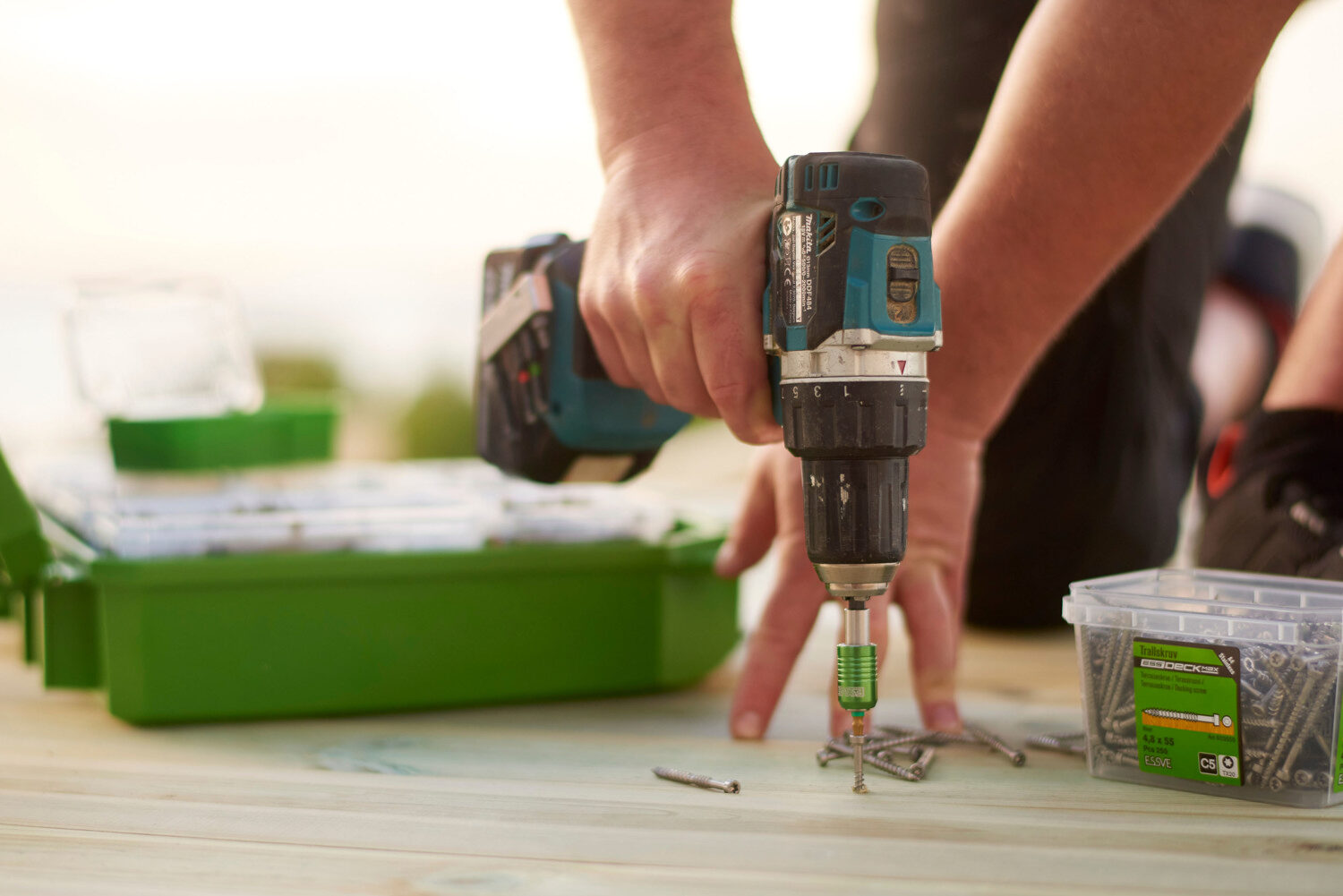
To reduce the risk of the boards splitting, fit the screws 30 mm from the longer side edge and 45 mm from the shorter edge (end) of the board.7. Drive the screws flush with the board surface.
A decking screw should be driven perpendicular to the decking board, and the screw head should sit level with the board surface, not deeper. If you sink the screw head below the surface, water will collect in the hole and the moisture can damage the wood.

Handy for installation
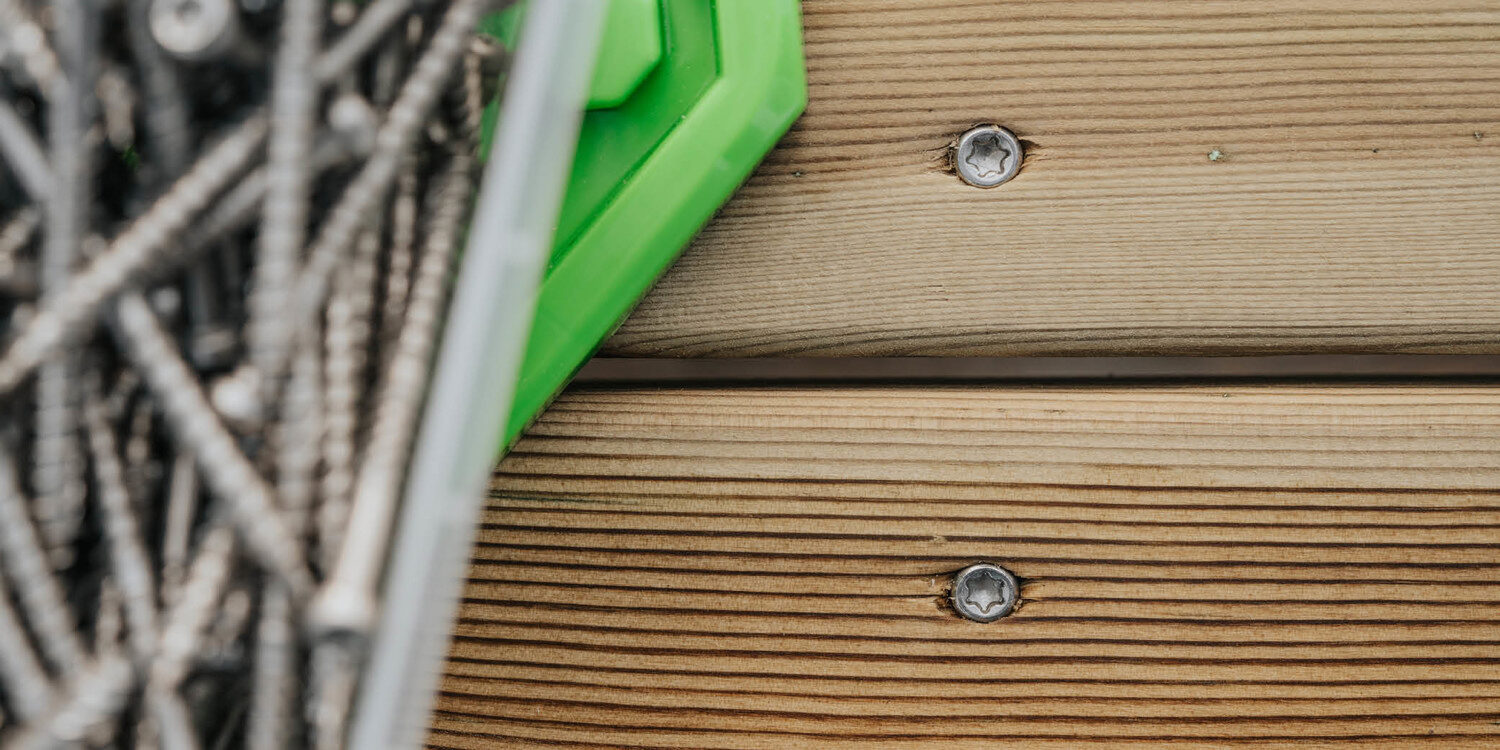
A decking spacer keeps the same spacing between boards, a board tightening tool helps to straighten warped boards and the ESSBOX+ case keeps your screws in order.
Deck foundation
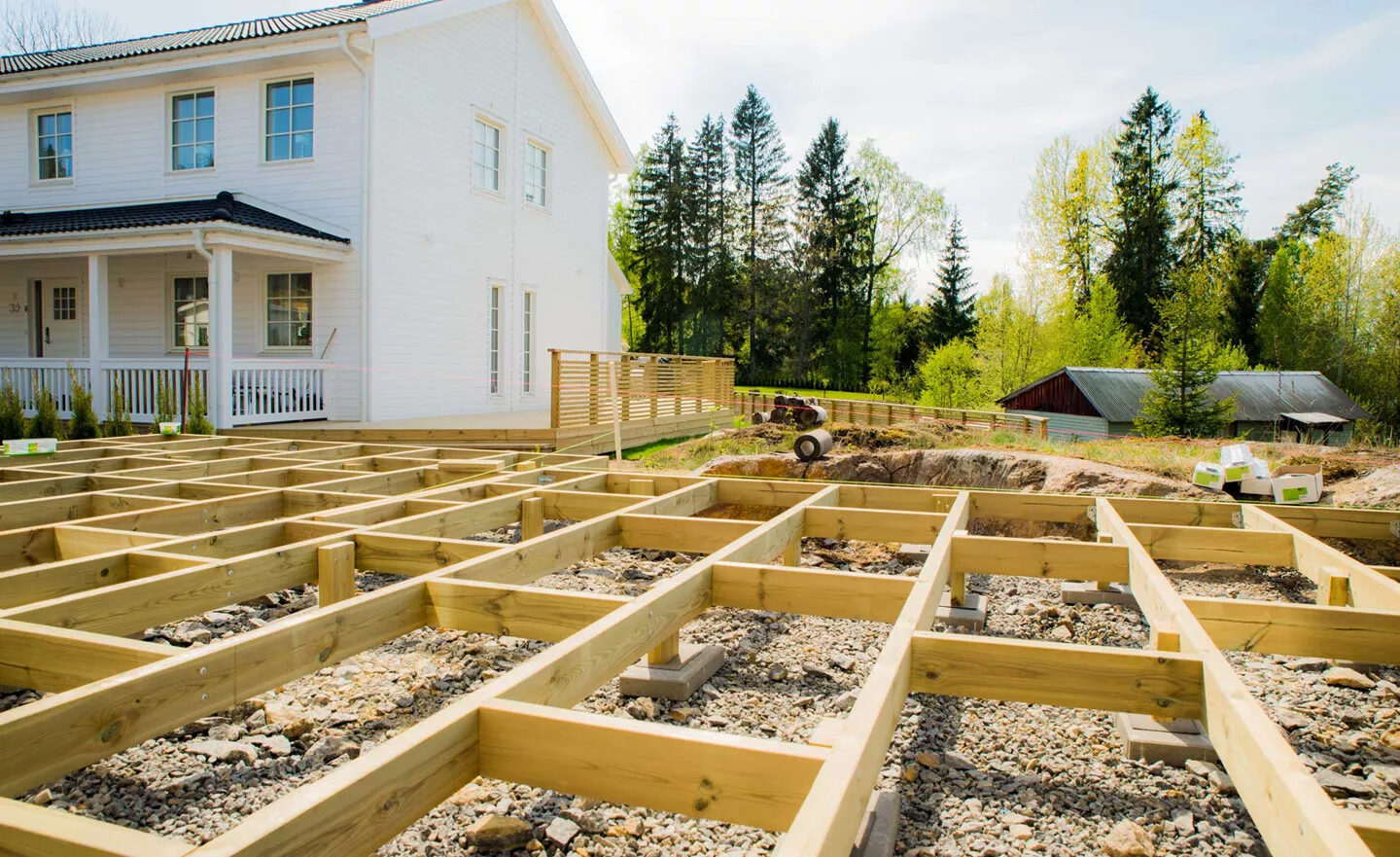
How do you build a foundation for a timber deck? It depends on the type of ground and on how the supporting structure is fixed.

Fixing the deck to the facade
A deck usually adjoins the wall of the house. The material of the wall and facade determines how, and with what, the joists are fixed to it.

Deck substructure
Once the foundation is finished and the joists are fixed to the walls of the building, it is time to build the deck substructure.

Visible or hidden fixing of decking boards?
Before you start laying the decking boards, you need to choose the fixing method. Traditional fixing with screws driven from the top is the most common, but fixing with hidden screws has also become popular recently.


Next steps of the guide:
Choose screws of the right quality
For a durable deck, it is important to choose a screw of the right quality with suitable corrosion protection. The choice is affected, for example, by the environment, the type of wood and the type of deck structure.