
How to choose wood cladding for a facade? Vertical installation, horizontal installation or board-and-batten
How to choose wood cladding for a facade?
Whether you are building a new house or replacing the facade of an existing building, you have to decide which facade boards to use. Vertical cladding, horizontal cladding or board-and-batten cladding? Each solution affects both the look of the building and how the whole structure performs.
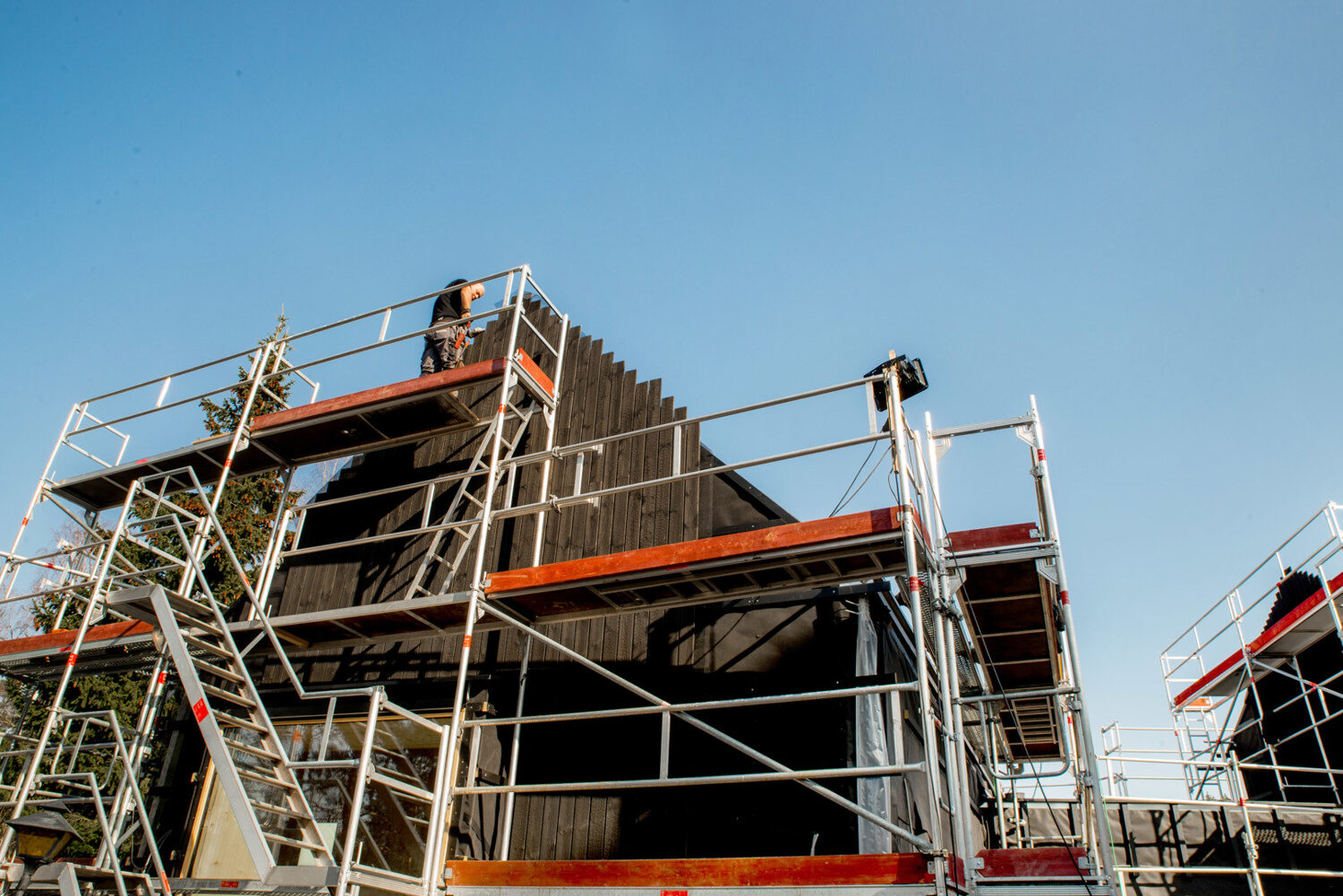
Choosing a wooden facade – where to start?
If you are planning to build or replace a wooden facade, the choice of wood cladding is crucial – from both an aesthetic and a practical point of view. Below we go through the three most popular types: vertical cladding, horizontal cladding and board-and-batten cladding. We explain how they differ and add useful installation tips for carpenters.
Which wood should you choose for a facade?
- Spruce – the most common choice for wooden facades. Good durability and often an attractive price.
- Pine – slightly more absorbent than spruce, but excellent with a suitable surface finish.
- Pine or spruce heartwood – a longer service life and natural resistance to rot.
How do you prepare facade boards before installation?
- Choose factory-primed cladding or apply the primer yourself before installation.
- If you want to paint the cladding, use a vapour-permeable paint to avoid moisture problems.
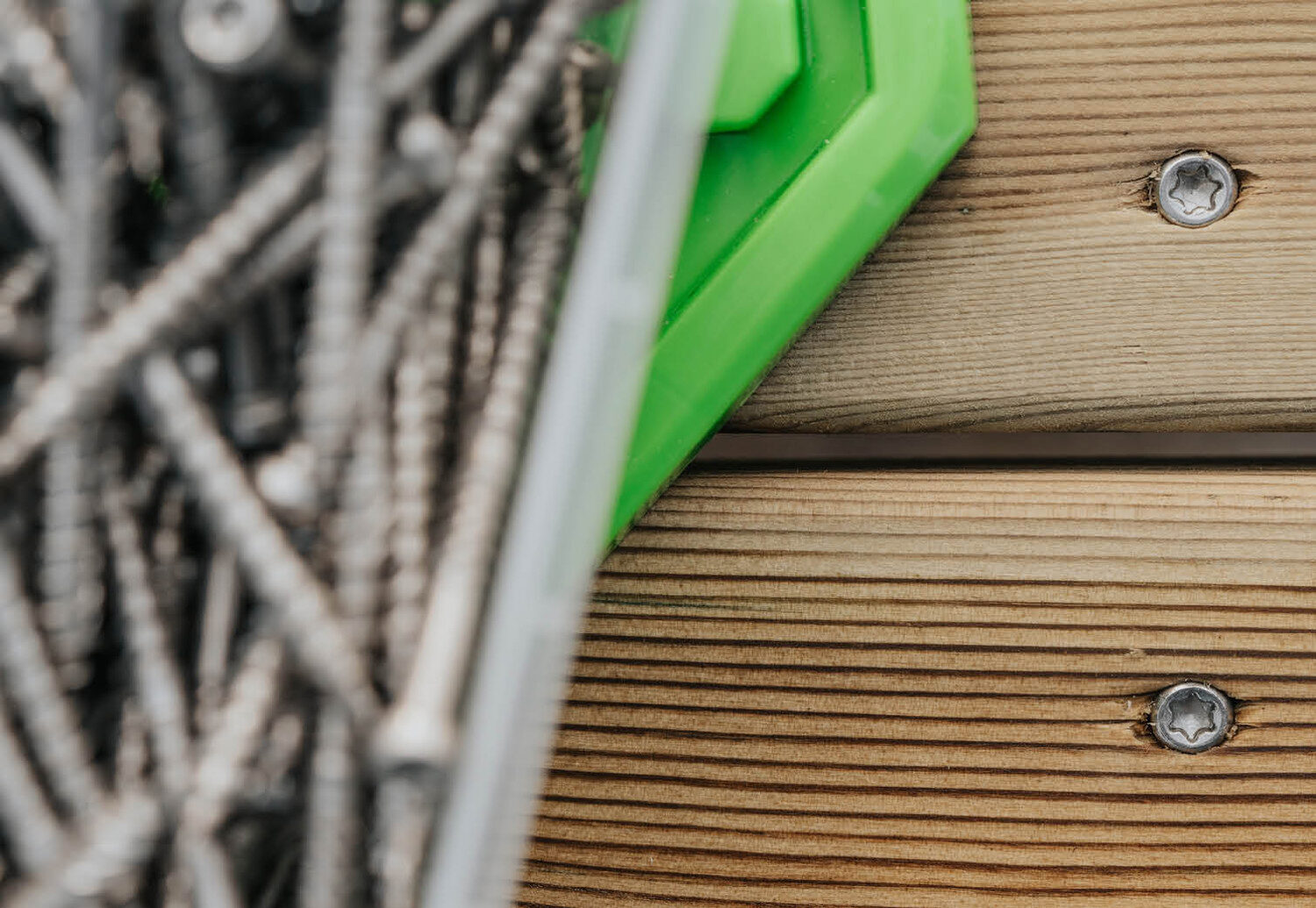
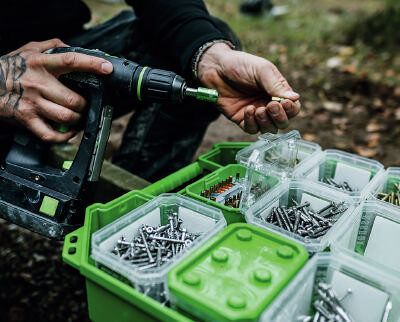
Tip: If you do not want to paint the fasteners, use one of our ready-made lacquered fasteners. Both nails and screws come in many colours.
Tip: Paint in dry weather and not in direct sunlight. Optimum temperature: from +10 to +25 °C.
Horizontally installed facade boards
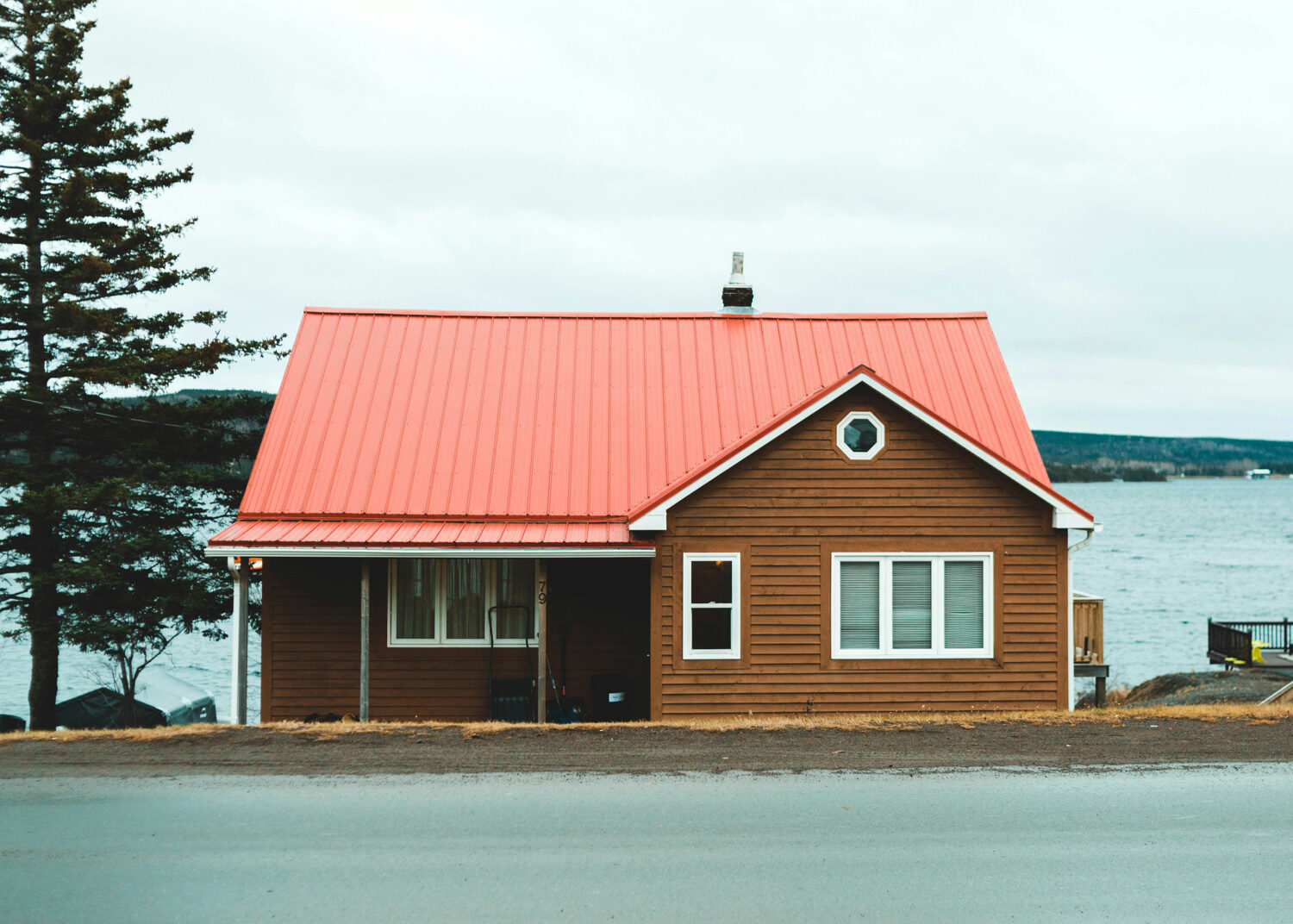
Horizontal cladding gives a building a classic, horizontal look, typical of older Swedish houses, especially in southern Sweden. The most popular option is traditional Swedish lap cladding (also called overlapping cladding).
Advantages of horizontal installation:
- The building looks wider and lower – on single-storey houses this often looks good.
- Easier installation on facades with windows and doors, because the cladding meets them in straight lines.
Installation tips:
- Install the boards so that the bottom edge sticks out slightly (away from the wall).
- Fix the top of each board so that the board below it can move freely.
- To avoid discolouration, use stainless steel nails or screws.
In this article you can find out more about how to prevent discolouration of a wooden facade.
Vertically installed facade boards
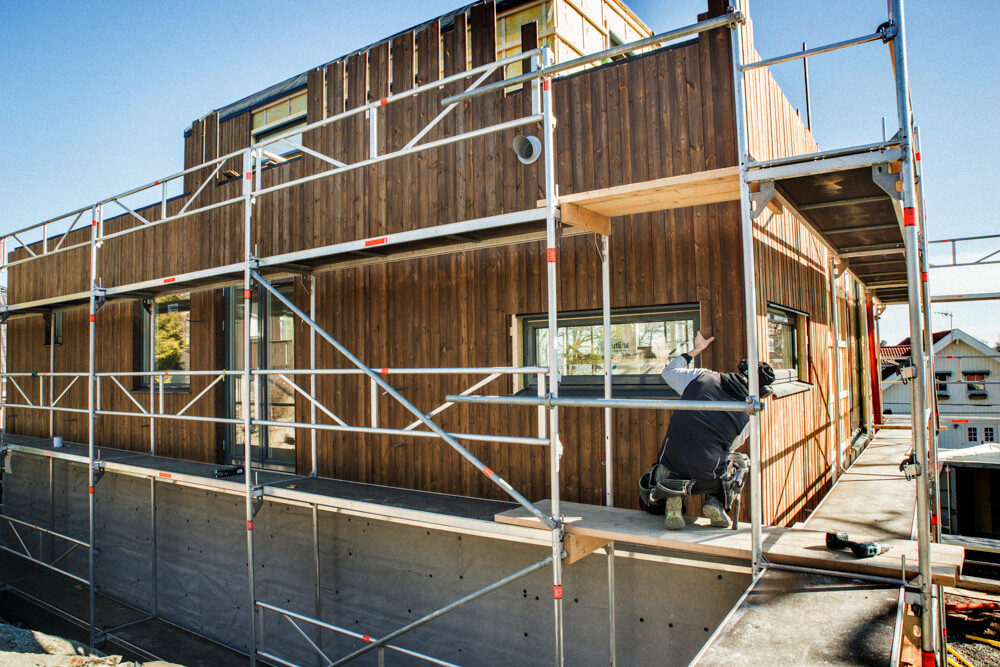
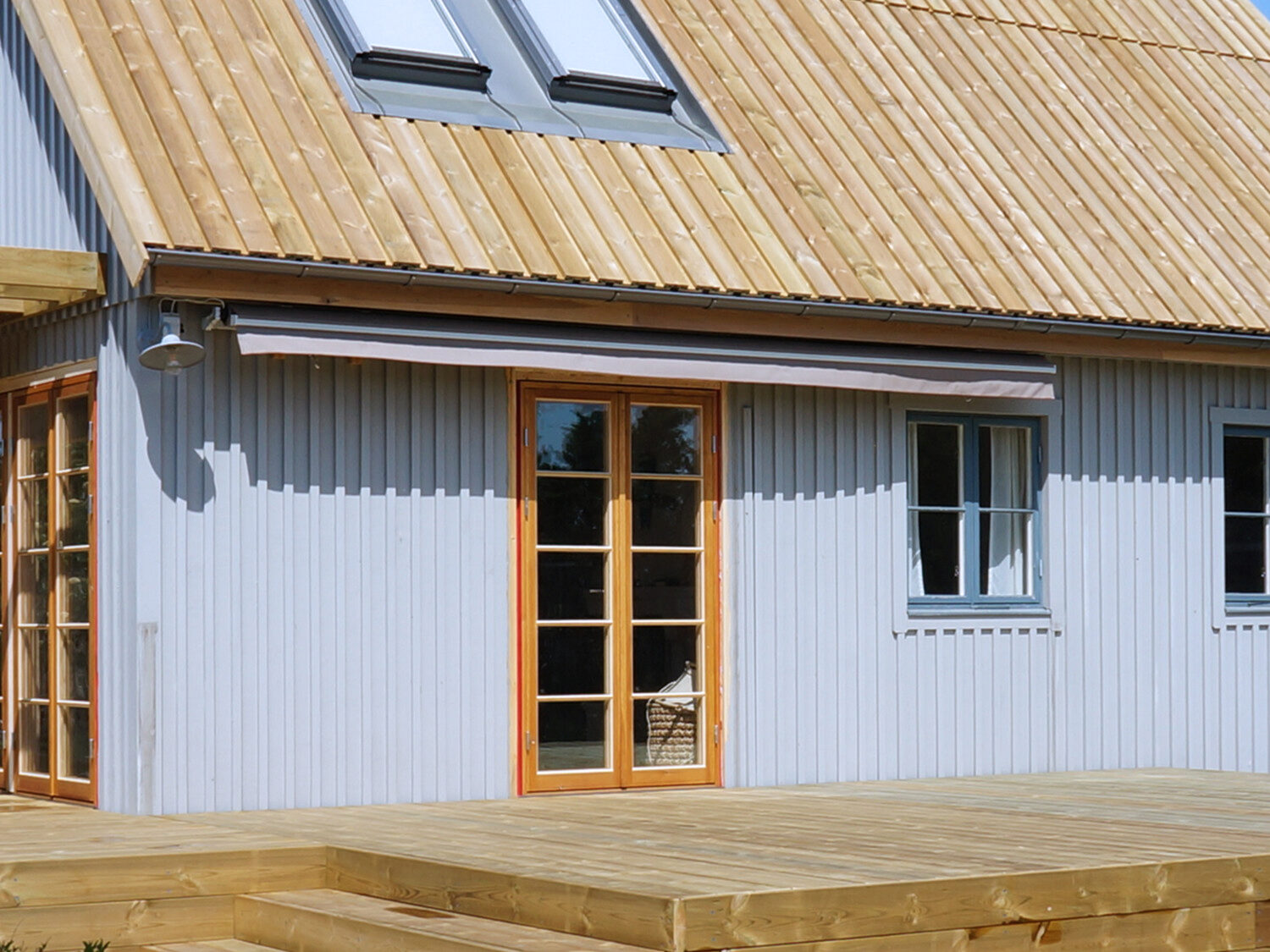
Vertical cladding is often used to make a house look taller and slimmer. Typical types are smooth cladding, cladding with a wavy profile or profiled cladding.
Advantages of vertical installation:
- When installed correctly, it drains water away effectively.
- Depending on the surface finish, it gives the building a more modern or Scandinavian look.
Installation tips:
- Always install on horizontal battens so that there is good ventilation behind the cladding.
- Do not drive nails through the tongue and groove joint, i.e. through two boards at once – drive them on the tongue side so that each board can move freely.
- Make sure the first board is exactly plumb – crooked cladding catches the eye immediately!
Board-and-batten facade boards
Board-and-batten cladding is a variant of vertical cladding in which wide bottom boards are covered by narrower cover boards.
Advantages of board-and-batten cladding:
- Very good weather resistance – particularly suitable for exposed locations.
- Gives the building a solid, rustic character – popular for cottages, barns and modern timber-frame buildings.
Installation tips:
- Install on two layers of battens (horizontal and vertical) for a firm fixing and good ventilation.
- First lay the bottom boards with gaps between them, then fit the cover boards on top to cover the joints.
- Always use treated timber, ideally primed before installation.
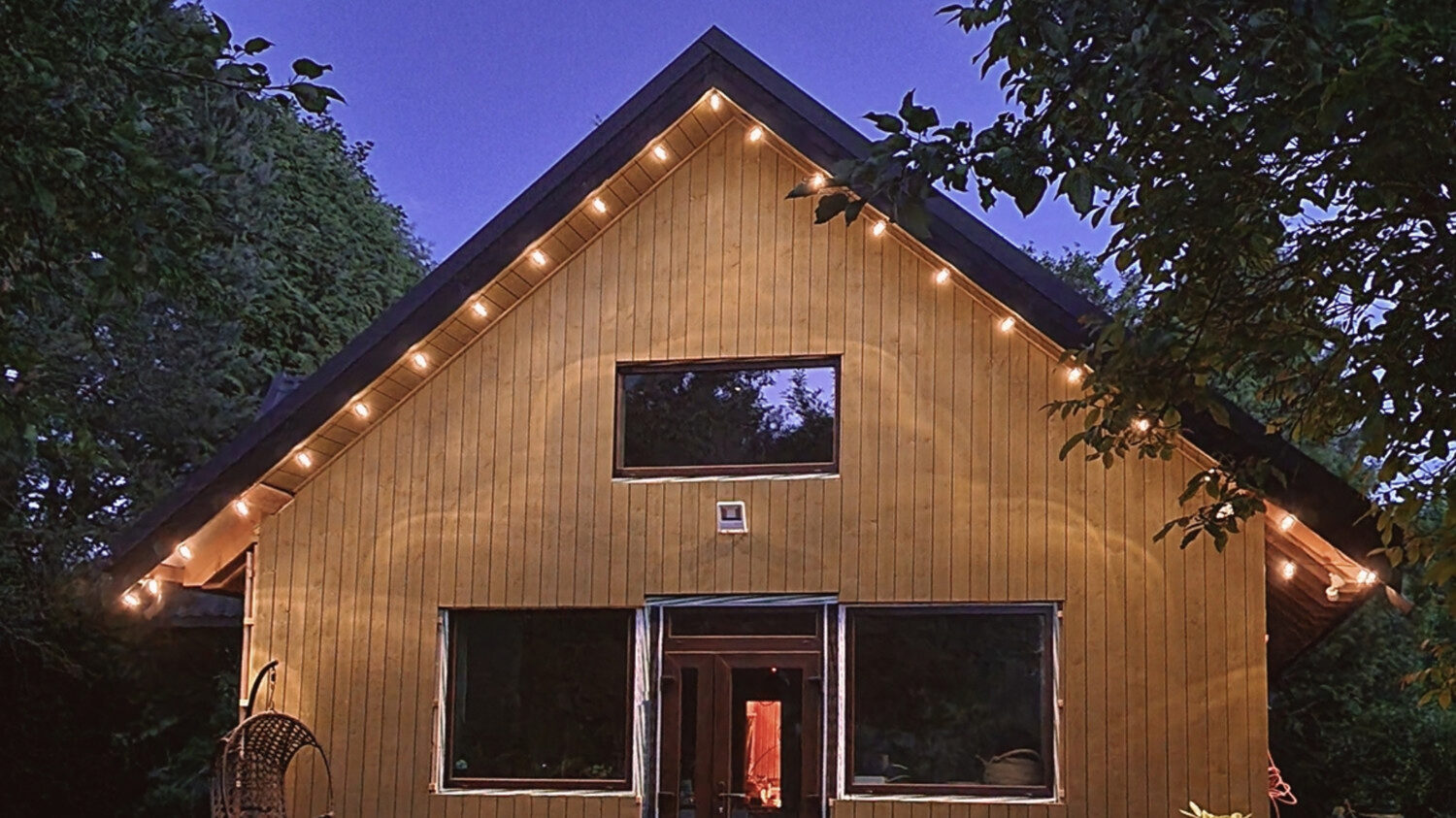
Which type of wooden facade should you choose?
The choice between vertical, horizontal and board-and-batten cladding depends on the look you want and on the conditions in which the building stands. Horizontal cladding suits houses with a sprawling shape, vertical cladding makes a building look taller, and board-and-batten cladding is very weather-resistant.Use our guide
6 steps to correct installation ⮕
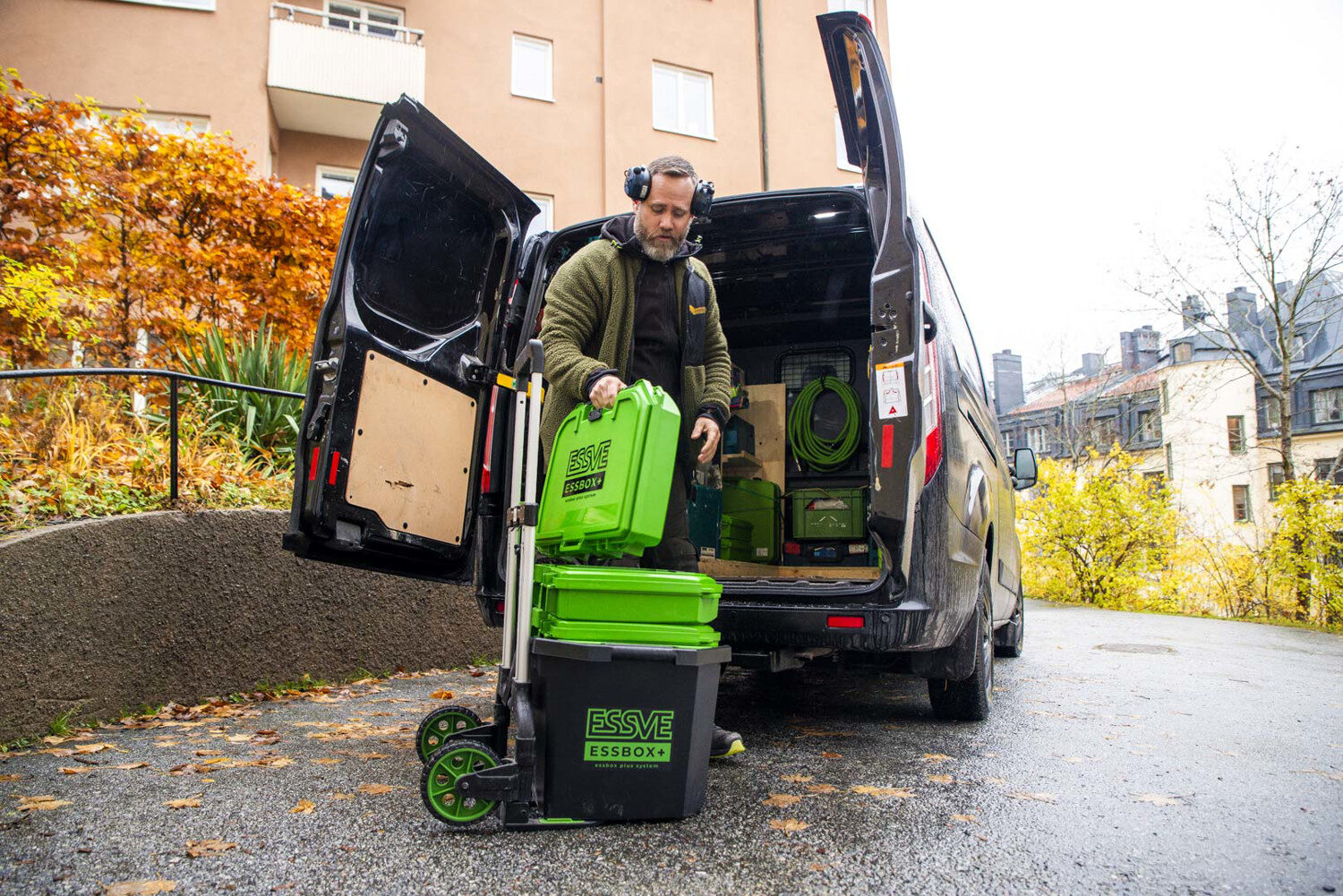
The right length and number
Fix the cladding correctly and make use of our help with the calculations.
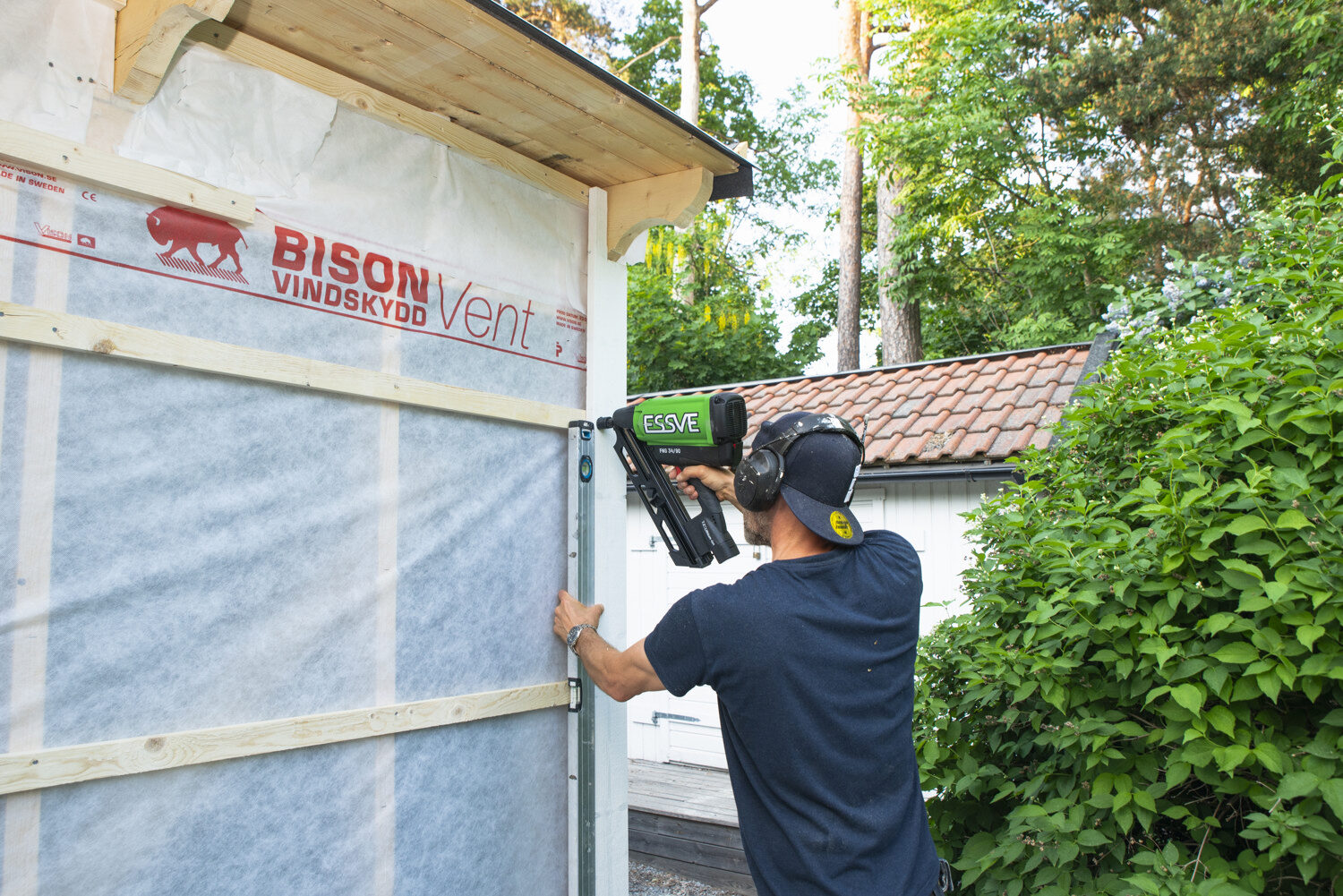
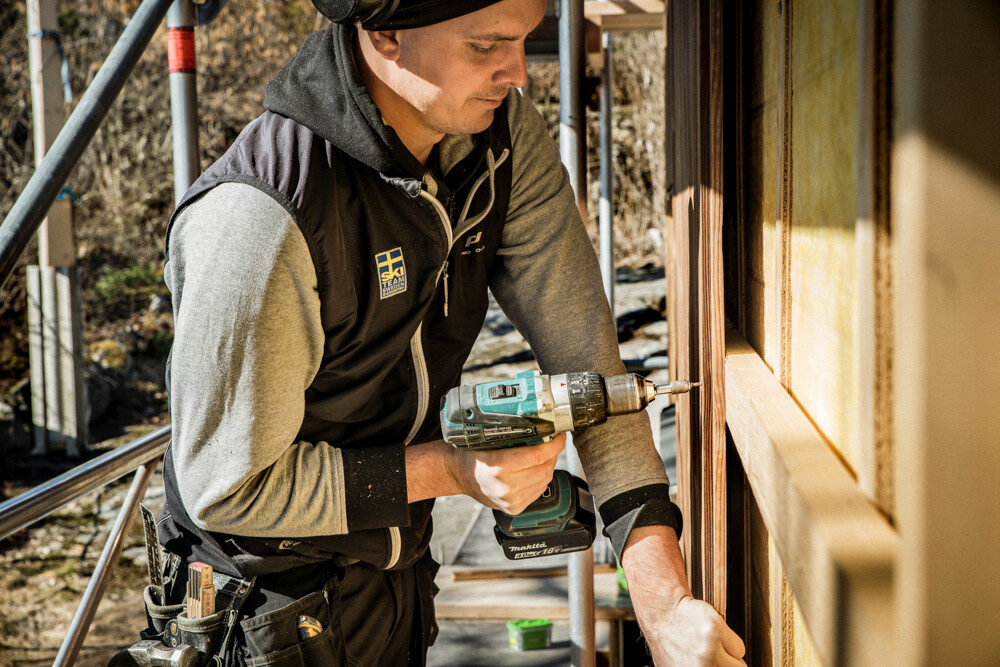
Installing the cladding
A simple guide to installing wood cladding. Advice and information.
Which wood cladding is best for a facade?
There is no single solution that suits every building. Horizontal cladding gives a facade a classic look, vertical cladding makes a building look taller and a board-and-batten facade is very weather-resistant. The choice should depend on the look you want and on the conditions in which the building stands.
Is it better to install a wooden facade vertically or horizontally?
Which wood should you choose for a facade?
Does a wooden facade need to be painted?
What is special about a board-and-batten facade?
The information in this guide is for guidance only. Follow the manufacturer's technical data sheet and the applicable standards; if in doubt, contact us.